FAQ

Common
Questions

Everything you need to know before reaching out — answered directly.

Ask Us Directly
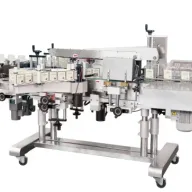
EDELSTEIN labeling equipment
Category 01

Products & Customization

What we build, and how far we'll customize it for your product.

What types of packaging machines do you manufacture?
EDELSTEIN manufactures three core lines: bottling machines (filling, rinsing, capping, sealing for PET/glass/HDPE bottles), cup packaging machines (filling and sealing for semi-solid or liquid products), and tube & bag machines (filling and end-sealing for creams, gels, and pastes). We also offer complete turnkey production lines that integrate multiple machines into a single automated system.
Do you offer OEM or custom machine solutions?
Yes. We accept both OEM and ODM orders. If your product has unique requirements — unusual container shapes, specific fill volumes, special materials, or hygienic-grade construction — our engineering team will design a custom solution. Contact us with your product specs and we'll provide a feasibility assessment.
What industries do your machines serve?
Our machines are deployed across seven industries: beverages, food & snacks, pharmaceuticals, cosmetics & personal care, household cleaning, chemicals, and agriculture. Each line is configurable for the specific hygiene, viscosity, and regulatory requirements of each sector.
Can one machine handle multiple container or bag formats?
Most of our machines are built with tool-less changeover parts, so a single line can run several container sizes or bag formats without buying separate equipment for each SKU. Tell us your format range during specification and we'll size the changeover kit to match — see our Solutions pages for the format range by machine type.
We're a small operation without high volume — will you still work with us?
Yes. Our benchtop and semi-automatic models are specifically built for small-batch production, trial runs, and startup brands — you don't need to invest in a fully automatic line from day one. As your volume grows, most models can be upgraded to semi-auto or full-auto configuration rather than replaced outright. Tell us your current production volume and we'll recommend the right starting machine.
Do you have experience with clients in my industry? Can I see examples?
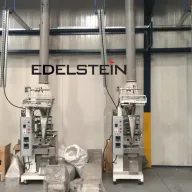
Yes. Our completed installations span fresh milk bottling, mineral water bottling, cup packaging (yogurt/jelly), pharmaceutical bottling, VFFS bag lines, and ice-tube filling, among other industries and formats — see our real installations on the homepage for photos and spec summaries from actual customer production floors. If your industry isn't listed, ask us directly — we have additional case studies not yet published.
EDELSTEIN integrated production line
Category 02

Technical Specs & Turnkey Lines

How we size a line, and what "turnkey" actually includes.

What's included in a turnkey production line?
A turnkey line covers everything from empty container infeed to the final packed product — filling, capping or sealing, labeling, and often conveying and case packing — designed, built, installed, and commissioned by one team. See our Turnkey Solutions page for a full breakdown.
How do I know what production line speed I actually need?
Start from your annual demand and available production hours, not from the fastest machine you can afford. We walk through this calculation with every customer during specification — our production speed guide covers the full method.
Can you integrate machines from other manufacturers into a line you design?
In most cases, yes — we regularly design lines where a customer's existing filler, labeler, or case packer needs to work alongside new EDELSTEIN equipment. Share your existing equipment's specifications during quotation so we can confirm compatibility.
What level of automation do your machines offer?
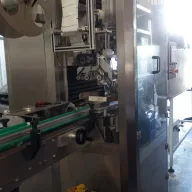
We build both semi-automatic and fully automatic machines across every product line. Semi-automatic machines suit lower-volume or highly variable production; fully automatic machines suit continuous high-volume runs. We'll recommend the right level based on your target output and labor availability.
EDELSTEIN machine being installed on-site
Category 03

Shipping & Installation

Getting a machine from our factory floor to running on yours.

Do you ship and install machines internationally?
Yes. We have delivered machines to clients in 30+ countries across Asia, the Middle East, Africa, Europe, and the Americas. We coordinate international freight, handle export documentation, and send on-site engineers for installation and commissioning wherever required.
How long does shipping take after the machine is manufactured?
It depends on destination and freight method. Sea freight is standard for full production lines, with air freight available for urgent single-machine orders. We confirm exact transit time once your shipping destination and Incoterms are set.
Do you send engineers on-site for installation, or is remote support enough?
For turnkey lines and larger machines, we typically send an engineer for on-site installation and commissioning. For standard catalog machines, many customers install successfully with remote video support alone — we'll recommend which approach fits your machine and site conditions.
What happens if a machine is damaged during shipping?
All shipments are insured, and we inspect and photograph every machine before it leaves our factory. If damage occurs in transit, we handle the insurance claim and expedite replacement parts — contact us immediately with photos of the damage on arrival.
EDELSTEIN control panel nameplate
Category 04

After-Sales & Warranty

What happens after the machine is running — training, parts, and support.

What after-sales support do you provide?
We offer four tiers of after-sales support: Training (remote video support, operation manuals, and customized on-site courses), Warranty (one-year guarantee with free replacement for quality-related defects), Installation (on-site engineer support for setup and commissioning), and Technical Support (lifetime consultation, emergency hotline, and scheduled maintenance planning).
What's covered under the one-year warranty?
The warranty covers manufacturing defects in materials and workmanship — we replace defective parts at no cost within the warranty period. It does not cover damage from misuse or unauthorized modification, or normal wear items like seals and gaskets, which are covered separately under routine maintenance guidance.
How quickly can you supply spare parts?
Common wear parts are generally kept in stock and ship quickly; less common or custom parts are made to order. We recommend ordering a starter spare parts kit with your original machine for the parts most likely to need replacement first — ask your sales engineer for a recommended list.
Do you provide training in languages other than English or Chinese?
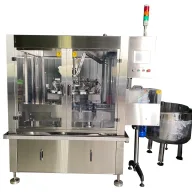
Our standard training and documentation are in English and Chinese. For other languages, we can arrange translated manuals and, for larger orders, an interpreter during on-site training — let us know your requirement during the order process.
EDELSTEIN rinsing and filling equipment
Category 05

Ordering, Quotes & Certification

How to get a number, how long it takes, and what paperwork ships with it.

How do I get a price quote?
Fill in the contact form with your product type, target output speed (units per hour), container format, and any special requirements. Our sales engineers will review your specs and respond with a detailed quote within 1 business day. There is no obligation and no charge for the quote.
What is the lead time for a new machine order?
Lead time varies by machine type and customization level. Standard catalog machines typically ship within 45–60 days. Custom or OEM machines require additional engineering time and generally have a lead time of 90–120 days from order confirmation. We will provide a specific timeline during the quotation stage.
Are your machines CE certified?
Yes. Our machines carry CE certification, meeting European safety and environmental standards. This makes them suitable for import and operation across EU member states and many other markets that recognise CE marking. Specific certifications for your target market (e.g. FDA compliance for the US, SFDA for China) can be discussed during the order process.
Do you require a deposit before starting production?
Yes. Standard terms require a deposit to confirm the order and begin production, with the remaining balance due before shipment — or against agreed milestones for larger turnkey projects. Exact payment terms are set out in your quotation.
Close-up of EDELSTEIN sealing equipment
Category 06

Machine Troubleshooting & Materials

Practical answers to the technical questions our engineers get asked most on the shop floor.

Why does my fill volume keep drifting even though nothing on the machine has changed?
In our experience this almost always traces back to one of six things: air trapped in the supply tubing, incomplete mixing of material and air, a loosened tube clamp, a worn gasket, unstable pneumatic air supply, or a valve that's sticking. Work through them in that order — checking material level and speed settings first, then clamps and gaskets, then air supply pressure — before assuming the filler itself needs recalibrating. Regular inspection catches most of these before they show up as bad fills.
How do you prevent over-tightening or under-tightening on capping?
Torque problems usually come from one of three places: dimensional variation between batches of bottles or caps, inconsistent pneumatic air quality causing jerky movement, or worn grippers and under-lubricated capping heads causing slippage. Magnetic clutch systems that slip at a set torque limit, or servo-driven capping with real-time torque monitoring, solve most of this at the machine level — but it's still worth spot-checking output with a manual torque meter on a routine schedule.
Why does a foil seal sometimes scorch, melt through, or fail to bond at all?
Foil sealing depends on temperature, dwell time, and pressure working together — not any one setting alone. Too little heat or time and the seal layer never fully bonds; too much and the foil discolors or burns through. Uneven pressure leaves partially bonded spots, especially on an irregular rim. Rather than relying on one fixed setting, we test all three together against your actual container and foil to establish a working range, not a single number.
Why do you use stainless steel for filling machine pipework, and does it need to be a specific grade?
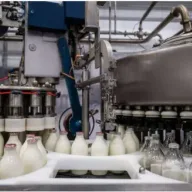
It comes down to hygiene, durability, and regulatory compliance rather than habit. 304 and 316L are the two grades used across food, beverage, cosmetic, and pharmaceutical lines because they resist corrosion and pressure and are easy to clean to food-grade standards. Stainless steel can still corrode if the protective chromium layer is damaged by salt, acid, or abrasive cleaners, so cleaning agent choice matters as much as the grade itself.
EDELSTEIN rotary filling equipment
Category 07

Advanced Filling Techniques

Thick, foaming, or drip-prone products all need something different from the standard fill cycle.

What's the best filling method for high-viscosity products like honey, creams, or sauces?
Piston filling is the standard technology for thick, high-viscosity products — the piston draws product from a hopper on the suction stroke and dispenses a precise volume on the discharge stroke. It holds ±0.5–1% accuracy even on heavy pastes, provided you slow the pumping and filling speed enough to avoid pulling air, keep an agitator in the hopper feeding product to the cylinder consistently, and maintain the piston seals and O-rings. Product temperature matters too — warmer product thins and flows more easily, which changes fill behavior if it isn't controlled.
How do you fill foaming liquids without underfilling?
Foam takes up volume that should be liquid, so a volumetric filler reads "full" before the container actually is. The fix is mostly about reducing turbulence: slow the fill speed using multi-stage control rather than a single uniform speed, fully bleed air from the tubing and filler before running, keep the supply tank level stable so the pump isn't pulling air, and make sure the filling nozzles are synchronized so product doesn't splash against the bottle wall. Worn gaskets and seals that let air in during suction make foaming worse, so check those first.
What causes "dripping" or stringing after the nozzle lifts, and how do you stop it?
This is almost always about the outlet valve, not the product. Valve timing and seal quality determine whether the flow cuts off cleanly — worn piston seals or O-rings let product back up and drip. A "snappy" multi-stage cutoff on the piston stroke helps the liquid break cleanly from the nozzle instead of stringing. Keeping product temperature consistent also helps, since viscosity — and therefore drip behavior — shifts as temperature changes.
What typically causes overflow during filling, and how is it controlled?
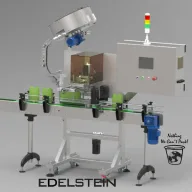
The usual causes are incorrect stroke calibration on the mechanical stops, a valve that isn't seating or timing correctly, filling speeds that cause splashing or foam, or unstable upstream supply pressure. Servo-driven, PLC-controlled filling gives the tightest control since dosing is set digitally rather than by a mechanical stop that can drift — combined with correctly matched nozzles for the product and regular seal replacement, this resolves most overflow cases.
EDELSTEIN capping equipment
Category 08

Line Jams & Downstream Issues

Cap feeders, bottle grip, and seal quality — the issues that show up further down the line.

Why does the cap feeder keep jamming?
Feeder jams are almost always a material or environment problem, not a machine fault. The most common causes are dimensional tolerance or flash on the caps themselves, dust or fiber debris building up in the feed track, static charge making caps stick to each other or the chute wall, or the sorter simply feeding caps faster than the capping head can apply them, creating backpressure. Non-standard closures like trigger sprayers often need dedicated feed adjustments, since they don't tumble and orient the way a standard cap does. Inline quality sensors, static dissipation, and keeping feed tracks clean solve most of it.
Why do bottles spin instead of the cap tightening?
Spinning means the capping head's torque has exceeded the friction holding the bottle in place — the cap and bottle rotate together instead of against each other, so the cap never actually tightens. It usually traces back to worn gripper belts or star-wheel pockets that have lost grip, bottles running slightly undersized, product residue or lubricant on the bottle exterior cutting friction, or torque set too high for that bottle/cap combination. Timing screws or star-wheels for mechanical stabilization, plus keeping gripper surfaces clean, usually fix it.
Why do we get micro-leaks even when the seal looks fine visually?
This is usually rim contamination, not a sealing setting problem. Product residue on the sealing surface — oils, powders, or a sticky film — creates a barrier that keeps the foil from bonding fully to the container at that spot. It can look sealed right off the machine and only leak after handling. Turning up the heat to compensate usually makes it worse, since it overheats the clean areas while the contaminated section still doesn't bond. The real fix is upstream — controlling nozzle positioning and container handling so the rim stays clean before it reaches the sealing head.
Why does the foil wrinkle or crease during sealing?
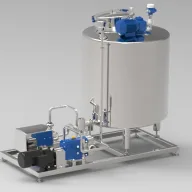
Check where the wrinkle first appears. If it's already there before the film reaches the sealing head, the cause is tension, tracking, or feed alignment — too loose and the film sags or waves, too tight and it stretches unevenly. If the film goes in flat and only wrinkles after contact with the sealing head, the cause is more likely uneven heat distribution, pressing pressure, or dwell time. Keeping the film roll, guide rollers, indexing mechanism, and sealing head properly centered prevents most of this before it starts.
EDELSTEIN storage tank and piping
Category 09

CIP Cleaning & Corrosion Resistance

Why clean-in-place beats manual cleaning, and how to keep a machine frame from corroding.

Why use a CIP (clean-in-place) system instead of manual cleaning?
CIP cleans pipework, pumps, and internal surfaces that manual cleaning can't fully reach — areas manual cleaning may look clean but doesn't actually sanitize to the same standard. For food-grade and emulsion products especially, CIP prevents cross-contamination, protects product quality and shelf life, and extends equipment life, which is why it's standard rather than optional for those categories.
What's the risk of skipping CIP on oil- or protein-containing products?
These products are the highest-risk case for manual cleaning — residue in hard-to-reach areas like pipe bends and pump housings supports bacterial growth, creates cross-contamination between batches, and accelerates equipment wear. For high-hygiene products we recommend CIP or a validated sterilization procedure rather than relying on manual disassembly and hand-cleaning, even when it looks thorough.
How do you make a machine frame corrosion-resistant for acidic or aggressive environments?
Four things work together: choosing an inherently resistant material (stainless steel, aluminum alloy, or for very aggressive chemicals, titanium or a plastic like PP/UHMW/PVC); a protective coating where bare metal is used (powder coating, galvanization, or a sacrificial zinc/magnesium layer); routine maintenance (cleaning, correct rust-inhibitor use, dry storage); and design choices that avoid crevices and tight gaps where corrosive liquid can sit and concentrate. Material selection should be matched to the specific chemical, not assumed from "stainless steel" alone.
Can I clean a piston filler by hand instead of running a CIP cycle?
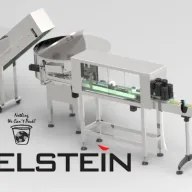
For lower-hygiene products, yes — with careful disassembly, the right detergent for the product, and thorough rinsing and drying. For high-hygiene products (dairy, pharma, anything with a hygiene claim) we still recommend CIP or a sterilization procedure, since hand cleaning can look clean while leaving residue in seals and fine clearances that a validated CIP cycle is designed to reach.
EDELSTEIN bottle unscrambler in stainless steel
Category 10

Stainless Steel in Depth

Rust, discoloration, and how to actually verify the grade you were sold.

Will stainless steel on my machine ever rust?
Yes, it can. The chromium in stainless steel forms a thin protective oxide layer, but that layer can be damaged by salt, acids, or abrasive cleaning tools — once it's broken, the exposed steel underneath can corrode like ordinary steel. Using the right cleaning agents and avoiding abrasive pads on stainless surfaces protects that layer.
Why does stainless steel sometimes turn black or discolored?
This is usually residual lubricant, polishing compound, or manufacturing wax left over from fabrication rather than a defect in the steel itself. A clean with dishwashing liquid or a baking-soda solution before first use typically removes it.
How can I verify that a part is genuinely 316L stainless and not a cheaper grade?
In rough order of rigor: visual and magnetic inspection (a starting filter, not proof on its own), a rapid chemical spot-test kit, and for certainty, lab chemical analysis or professional material testing against the mill certificate. For critical hygienic applications, ask your supplier for the material certificate rather than relying on visual inspection alone.
Can an O-ring cause black marks or wear on a piston?
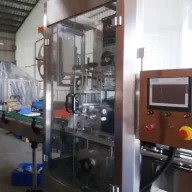
A silicone O-ring itself doesn't abrade steel under normal conditions. The usual cause is trapped particles, polishing residue, or a surface defect on the piston — the O-ring then pushes that debris against the surface as it moves, which is what causes the marking or localized black oxidation, not the O-ring material itself.
EDELSTEIN filling line installed on-site
Category 11

Filling Fundamentals

Gravity, isobaric, and piston filling — what each one actually is and when to use it.

What is gravity (time-based) filling and when should I use it?
Gravity filling meters product by opening a valve for a fixed time and letting product flow by gravity alone — simple, low-cost, and gentle on the product. It works well for thin, non-foaming, non-carbonated liquids like water or thin oils, but accuracy is more sensitive to viscosity and tank-level changes than piston or servo-controlled methods, so it's not the right choice once accuracy requirements tighten or product viscosity varies.
What is equal-level (isobaric) filling and why does it matter for carbonated products?
Isobaric filling equalizes pressure between the bottle and the filling bowl before product flows, then fills to a level rather than a volume — this is what keeps carbonated drinks from foaming over during filling and gives every bottle the same visible fill height regardless of small variations in bottle shape. It's the standard choice for carbonated beverages and any clear-bottle product where fill-level consistency is visible on the shelf.
What exactly is piston filling, and how is it different from other volumetric methods?
A piston filler draws a precise volume of product into a cylinder on the suction stroke, then pushes that exact volume out on the discharge stroke — the accuracy comes from the mechanical piston displacement, not from timing a valve or flow meter. That's what makes it insensitive to viscosity and temperature changes that would throw off a time-based system, which is why it's the default for creams, sauces, and anything thicker than water.
Should I choose a linear or rotary filling machine configuration?
Linear machines are simpler, cheaper, and easier to service, and make sense at lower-to-mid speeds or when floor space is tight. Rotary machines carry more filling heads on a turntable and reach much higher speeds in a smaller footprint, but cost more and are more involved to service. The crossover point is usually your target output — we size this against your actual required speed during specification rather than defaulting to one or the other.
EDELSTEIN capping equipment
Category 12

Capping Precision & Changeover

Misalignment, cosmetic damage, and cutting changeover time between cap types.

Read the full troubleshooting guide →
What causes cap misalignment during capping?
Misalignment usually comes from the bottle not being centered under the capping head when the cap is applied — caused by worn or incorrectly set guide rails, a starwheel pocket that doesn't match the bottle's actual diameter, or conveyor speed that's out of sync with the capping head's cycle time. Confirming guide-rail spacing and starwheel fit against your actual bottle, not just the nominal spec, resolves most cases.
What causes cosmetic defects on caps during capping — scratches, dents, or damaged printing?
This is almost always contact pressure or friction at a point the cap isn't designed to take load — grippers gripping too hard or at the wrong height, a chuck that's not sized correctly for the cap profile, or caps rubbing against guide rails during feed. Matching the chuck and gripper geometry to the specific cap, not a generic "close enough" size, is the fix, since printed or textured caps show marking damage more visibly than plain ones.
How do you reduce downtime when switching between cap types or sizes?
The changeover time is mostly in the parts that touch the cap directly — chuck heads, guide rails, and starwheel — so keeping a dedicated changeover kit per cap type and using tool-less quick-release mounts cuts changeover from an hour-plus down to well under 30 minutes. We size these kits against your actual cap range during specification rather than assuming a single universal fit.
How is capping torque quality actually verified on a running line, not just at setup?
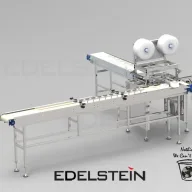
Beyond periodic manual torque-meter spot checks, inline torque monitoring on servo-driven capping heads logs actual applied torque per cap in real time, flagging out-of-range results before they leave the line. For lines without servo capping, a scheduled manual audit — a fixed number of caps checked per shift — is the practical substitute.
EDELSTEIN sealing equipment
Category 13

Induction Sealing, Sanitation & Closure Types

Timing induction sealing correctly, keeping a capping line sanitary, and choosing between closure types.

How does induction sealing synchronize with the capping station?
The induction sealer has to activate in the window after the cap is applied but before the bottle moves out of the sealing head's induction field — timing that's set relative to the capping head's cycle, not on a fixed independent timer. If line speed changes without re-syncing this window, seals can be inconsistent even though the capper and sealer are each working correctly on their own.
How do you maintain sanitation on a capping line handling food or cosmetic products?
The parts that touch the product or the inside of the cap — chucks, grippers, and cap chutes — need a cleaning schedule matched to your product's shelf-life and allergen requirements, not just a general wipe-down at shift end. Smooth, crevice-free chuck and guide surfaces make that cleaning actually effective rather than just cosmetic.
How do you handle dimensional variation in caps or bottles between suppliers or batches?
Loosen the tolerance you're designing to, or tighten your incoming inspection — one of the two has to give. In practice we recommend spot-checking incoming cap and bottle batches against your machine's tolerance window before a run, since a batch that's within the supplier's spec can still be outside what your gripper or chuck setting can reliably handle if the two tolerances weren't matched at specification time.
What's the practical difference between screw, snap, and ROPP capping — how do I know which one I need?
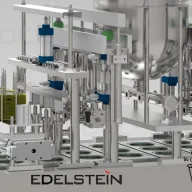
Screw capping re-opens and re-closes, which is what most retail liquid products need. Snap capping is faster and cheaper per cap but generally isn't resealable, suiting single-use or tamper-evident-by-design closures. ROPP (roll-on pilfer-proof) capping forms the thread onto the bottle at the moment of capping and gives tamper-evidence without a separate shrink-band step, which is why it's common on pharma and spirits. The right choice depends on whether the consumer needs to reclose the container, not on cost alone.
EDELSTEIN cup sealing equipment
Category 14

Sealing Quality & Compatibility

Rim flatness, die buildup, film compatibility, and how seal integrity is actually tested.

Read the full troubleshooting guide →
Why does the container rim need to be flat and centered for a good seal?
The sealing head applies heat and pressure evenly across what it assumes is a flat, level surface — a rim that's warped, chipped, or off-center gets uneven contact, which means uneven bonding even if temperature and pressure are set correctly. This is a container-quality and infeed-alignment issue more often than a sealing-machine setting issue, so it's worth checking the rim itself before adjusting the sealer.
Why does foil residue build up on the sealing die over time, and does it affect seal quality?
Some buildup is normal as foil adhesive transfers to the die surface over repeated cycles, but once it accumulates it changes the die's effective contact surface — which can produce inconsistent seals even at settings that worked previously. A scheduled die cleaning interval, rather than cleaning reactively after seals start failing, keeps this from becoming a production problem.
How do I know if my foil or film is actually compatible with my product and container?
Compatibility isn't just "does it seal" — it's whether the sealing layer bonds to your specific container material, whether the adhesive reacts with your product if there's any headspace contact, and whether the film survives your product's fill temperature without deforming. We test actual production samples — your container, your film, your product — rather than relying on a film's generic spec sheet, since the same foil can behave differently across different container resins.
What tests actually confirm a seal is airtight, not just visually intact?
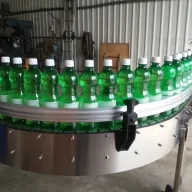
A seal can look complete and still leak. Practical tests include a vacuum/pressure decay test (holds vacuum or pressure and watches for drop-off), a burst test (measures the pressure at which the seal fails), and for critical applications, a dye penetration test that reveals microscopic gaps invisible to the eye. Which test makes sense depends on your product's risk profile — a vacuum decay test on a sample frequency is standard for most production lines.
EDELSTEIN bottles moving through conveyor
Category 15

Sealing Line Consistency

Why "the same settings" stop working — wall thickness, heater drift, and die service life.

Does container wall-thickness variation affect seal quality?
Yes — sealing pressure and heat transfer both assume a consistent wall thickness at the rim. A container that's thinner than spec can overheat and deform under standard settings, while a thicker one may not get enough heat transfer to bond fully. This is a common cause of "the same settings worked yesterday but not today" when a new container batch comes in from a different mold cavity or supplier.
How do you catch a bad seal before it leaves the line rather than finding out later?
Inline vision inspection checking foil placement and seal appearance on every unit is the most common approach, backed by a scheduled physical test (vacuum decay or burst) on a sample frequency appropriate to your risk category. Relying on visual inspection alone catches gross failures but misses the micro-leaks that only show up under pressure testing.
What causes seal quality to drift over a shift even though nobody changed the settings?
Heater elements lose consistency as they age or as scale builds up, meaning the die reaches a slightly different actual temperature than the setpoint over time even though the control panel reading hasn't changed. A recalibration schedule that checks actual die temperature against the displayed setpoint — not just trusting the display — catches this drift before it becomes a quality problem.
How often should sealing dies be reconditioned or replaced?
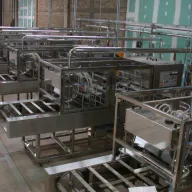
This depends on cycle count and foil type more than calendar time, since die wear comes from repeated contact cycles and adhesive residue buildup, not age on its own. We recommend tracking cycle count per die and setting a reconditioning interval based on when seal quality metrics — not appearance alone — start trending down, rather than waiting for a visible failure.
EDELSTEIN infeed and handling equipment
Category 16

Bottle Unscrambling & Infeed

Jams, tipping, and orientation failures at the start of the line.

Why does the bottle unscrambler jam or block up?
Most jams trace back to a mismatch between the bottle's actual shape and the unscrambler's guide geometry — bottles with an unusual base, a non-standard neck ring, or dimensional variation between batches don't orient reliably in a hopper set up for a slightly different profile. Confirming the unscrambler tooling against your actual bottle sample, not just its nominal drawing, prevents most of this.
How long does it take to change over an unscrambler between bottle shapes?
The tooling that actually changes is the hopper insert, guide rails, and orientation tooling — not the whole machine — so with a dedicated changeover kit per bottle shape, this is typically well under an hour. Running multiple genuinely different bottle geometries on one line is worth planning for at specification time so the changeover kits are ready rather than fabricated after the fact.
Why do bottles tip over or become unstable in the unscrambler?
This usually means the bottle's center of gravity and base geometry don't match what the hopper and guide tooling were designed for — tall, narrow, or top-heavy bottles are the most common case. Adjusting hopper agitation speed and guide rail height for that specific bottle shape, rather than running default settings, is the usual fix.
What causes bottles to come out of the unscrambler facing the wrong way?
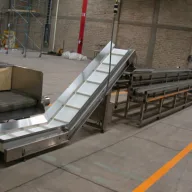
Orientation failures usually come from a neck or base feature that isn't distinctive enough for the machine's orientation tooling to reliably detect, or from tooling that's worn and no longer engaging the feature it was designed to catch. This is more common on bottles with subtle asymmetry than on obviously shaped ones, and is solved by tooling matched to the specific orientation feature on your bottle, not a generic setting.
EDELSTEIN accumulation and conveying equipment
Category 17

Bottle Handling Quality & Safety

Cosmetic damage, static, line synchronization, and the safety side of high-speed handling.

What causes cosmetic damage (scuffs, scratches) to bottles during handling?
Contact between bottles and machine surfaces — guide rails, starwheels, conveyor guards — at higher-than-necessary pressure or at a rough contact point is the usual cause, more often than the bottle material itself being fragile. Smooth, correctly adjusted guide surfaces and matching starwheel pocket size to the actual bottle, not a loose generic fit, reduces this significantly, especially on glass or high-gloss bottles where marks are most visible.
How does static charge affect bottle handling?
Static causes bottles or caps to cling to each other or to chute and guide surfaces, disrupting the smooth gravity- or conveyor-fed flow the machine is designed around — this shows up as erratic feeding rather than a clean jam. It's more common with certain plastics and in low-humidity environments. Static dissipation bars or ionizing air at the feed point are the standard fix rather than adjusting mechanical settings that aren't actually the cause.
How do you keep bottle handling synchronized across multiple machines on one line?
Each station — unscrambler, filler, capper, labeler — has its own natural cycle rate, and the line only runs smoothly when accumulation buffers between stations absorb small speed differences rather than forcing every station to match exactly. Sizing conveyor buffer length for your actual speed variation, not just your nameplate speed, is what prevents a slowdown at one station from cascading into stoppages further down the line.
What noise and safety considerations apply to high-speed bottle handling equipment?
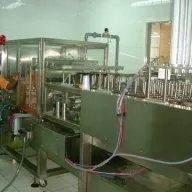
High-speed handling — bottles striking guide rails, pneumatic actuators cycling, motors running continuously — is one of the louder sections of a packaging line, so guarding, noise enclosures where practical, and operator PPE requirements should be planned as part of the line design, not added afterward. We specify guarding and e-stop placement to the safety standards relevant to your destination market during the line design phase.
EDELSTEIN factory floor operations
Category 18

Cap Sorting

Orientation, jams, and sorting closures that don't behave like standard caps.

Why do caps come out of the cap sorter facing the wrong orientation?
This is almost always the sorting track's orientation feature not matching the cap's actual geometry closely enough — a cap with a subtle top/bottom asymmetry needs tooling that reliably catches that specific feature, and worn or slightly mismatched tooling lets misoriented caps slip through instead of being rejected and recirculated.
Why does the cap sorter jam or block up?
The same causes as capping-station feeder jams apply here, one step earlier: dimensional tolerance or flash on the caps, debris accumulation in the sorting track, and static causing caps to stick together instead of separating cleanly. Keeping the sorting bowl and track clean and matching tooling to your actual cap tolerance, not just the nominal spec, prevents most jams.
How do you sort unusual or non-standard caps — trigger sprayers, pumps, flip-tops?
Standard bulk-sorting bowls are built around caps that tumble and self-orient by rolling, which non-standard closures with an irregular profile generally don't do reliably. These usually need dedicated orientation tooling — sometimes a different sorting principle entirely — specified against the actual closure rather than adapted from a standard cap sorter.
How is cap sorter throughput kept in sync with a faster capping head?
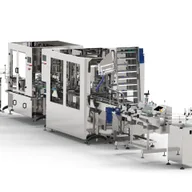
If the sorter can't keep pace, the capping head starves and the line slows to the sorter's rate regardless of the capper's own speed rating — so the sorter's throughput needs to be specified with headroom above the capping head's actual speed, not matched exactly to it. A buffer track between the sorter and capping head also absorbs short-term rate mismatches.
EDELSTEIN pharmaceutical line configuration
Category 19

Cap Sorting QA & Changeover

Changeover speed, incoming quality control, and hygiene at the sorting stage.

How quickly can a cap sorter be changed over between cap sizes?
The bowl tooling and track width are what actually change — with a dedicated tooling set per cap size, this is typically a 15–30 minute changeover rather than a full bowl replacement. Running many different cap sizes on one line is worth flagging during specification so tooling sets are ready in advance.
How is incoming cap quality controlled before it reaches the sorter?
Most manufacturers do incoming batch sampling against dimensional and cosmetic tolerance before a batch goes into production, since a cap batch that passes the supplier's own spec can still cause sorter jams if it's at the edge of what your specific tooling tolerates. This is a receiving-inspection practice on your side more than a machine setting.
How does cap sorting hygiene work for food or pharmaceutical closures?
Cap sorting equipment for hygienic applications is specified with smooth, crevice-free bowl and track surfaces and a cleaning schedule matched to the product category — the same principle as hygienic design elsewhere on the line, applied to the sorting stage specifically because caps are handled in bulk and have more surface contact with the machine than a single bottle does.
How is cap sorting quality verified inline, not just at incoming inspection?
Vision inspection at the sorter's discharge — checking orientation and basic cosmetic condition before a cap reaches the capping head — catches problems that incoming sampling alone would miss, since it inspects every cap rather than a sample. This is most valuable on high-value or safety-critical closures where a single misoriented cap reaching the capper is worth preventing.
EDELSTEIN capping and maintenance access
Category 20

Maintenance & Reliability

Downtime, lubrication, spare parts, and the air-quality issue that hides behind other symptoms.

What's the most common cause of unscheduled downtime on a packaging line?
In our experience it's rarely a catastrophic failure — it's small wear items (seals, gaskets, worn grippers) that were due for replacement but got pushed past their service interval, then fail at the worst possible time. A parts-replacement schedule based on cycle count or elapsed time, not "replace when it visibly fails," prevents most of what shows up as unscheduled downtime.
How should lubrication be managed on a packaging line?
Over-lubrication attracts dust and product residue just as reliably as under-lubrication causes wear, so the goal is the correct interval and quantity for each point, not "more is safer." A written lubrication schedule per machine, followed consistently rather than done reactively, is the practical standard — food-grade lubricant is required at any point with potential product contact.
Which spare parts should I keep in stock, and which can wait?
Keep parts that wear predictably and stop the line if they fail without warning — seals, gaskets, common wear items in the fill and cap heads — in stock as a starter kit ordered with the original machine. Less common or custom parts can be made to order when needed, since they're less likely to fail unexpectedly and stocking them ties up capital for low-probability events.
How does pneumatic air quality affect machine reliability?
Moisture, oil carryover, or particulate in the compressed air supply causes exactly the kind of jerky, inconsistent actuator movement that shows up as capping torque variation, filling inconsistency, or a general sense that the machine feels less precise than it used to — problems that get chased at the machine level when the real cause is upstream at the air supply. A properly sized filter, regulator, and dryer on the air line, maintained on schedule, prevents a wide range of seemingly unrelated symptoms.