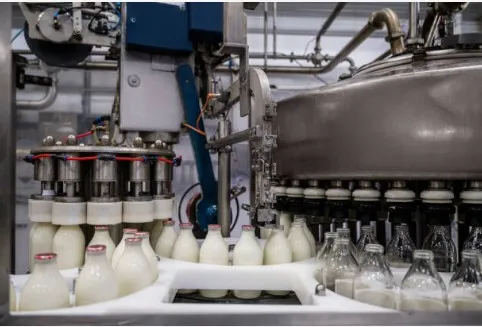
The Line
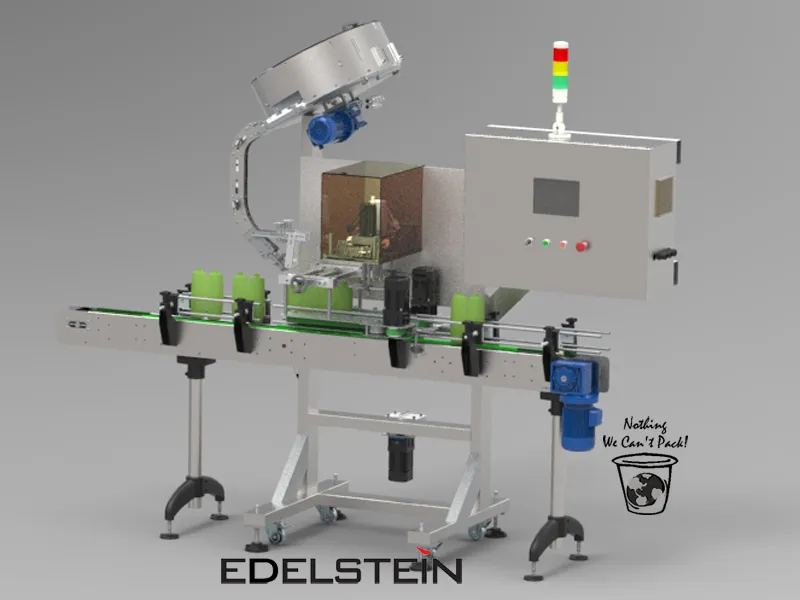
This installation runs on a rotary monobloc: bottle infeed and unscrambling, a rotary rinser using sterile water or air, a rotary piston filler, a capper (aluminum ROPP or plastic screw depending on the bottle format), and a labeler before discharge to case packing. Keeping rinse, fill, and cap on a single rotary table cuts the floor footprint — a real constraint in most dairy plants, where the line has to sit close to the cold room and there isn't much room to spare.
Engineering Notes
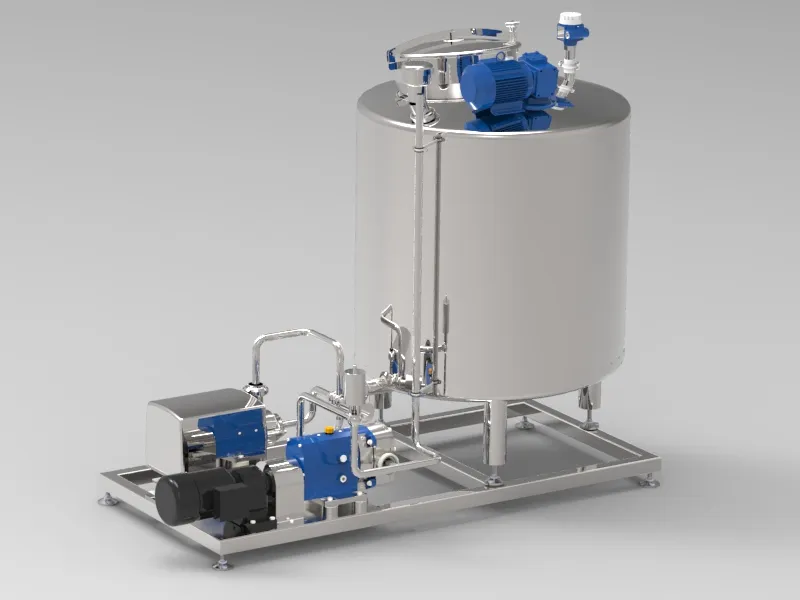
All product-contact surfaces are 316 stainless with CIP-compatible piping — dairy lines get washed down between batches, not just at the end of a shift.
Cold product condenses on the outside of the bottle right after filling. The labeler's adhesive and wrap system has to be selected for that, or the label doesn't hold.
Foam control matters more with milk than with water — bottom-up nozzle filling reduces the aeration that top-down filling causes with milk's fat content.
Glass and rigid plastic bottles need different starwheel and guide-rail settings on the same rotary table. If the plant runs both formats, the changeover needs to be genuinely tool-less.
Short shelf life means uptime matters more than top speed. A stable 8,000 BPH beats an unstable 10,000 BPH when a stoppage means writing off product.
Machinery in This Line
Frequently Asked Questions
-
Can the same line run both glass and plastic milk bottles?
Yes, with tool-less changeover parts on the starwheels, guide rails, and capping head. The two formats behave differently under the same rotary table geometry, so the changeover kit is sized to your specific bottle set during specification rather than assumed generic.
-
How often does a dairy line need to be washed down?
Typically a CIP (clean-in-place) rinse between batch changes, with a full teardown clean on a weekly or shift-based schedule depending on your plant's food safety program. The filler and rinser are built with CIP-compatible piping and minimal dead legs specifically for this duty cycle.
Planning a Milk or Dairy Bottling Line?
Tell us your bottle format, output target, and wash-down routine. Our engineers will recommend the right filling and capping configuration — at no cost and with no commitment.
Talk to Our Engineers