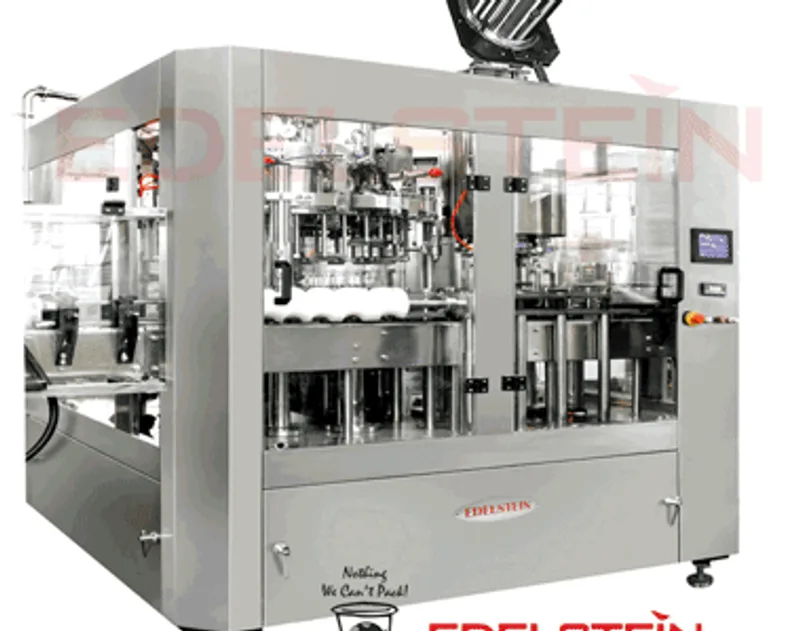
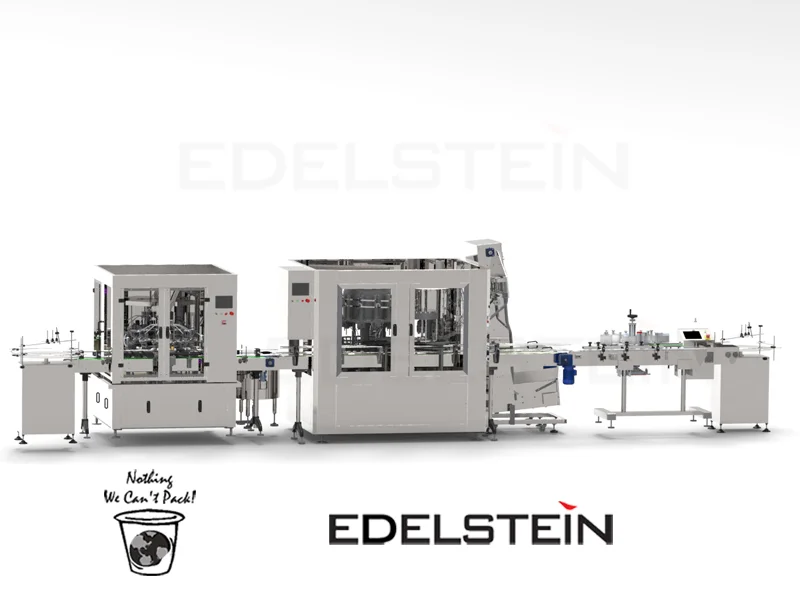
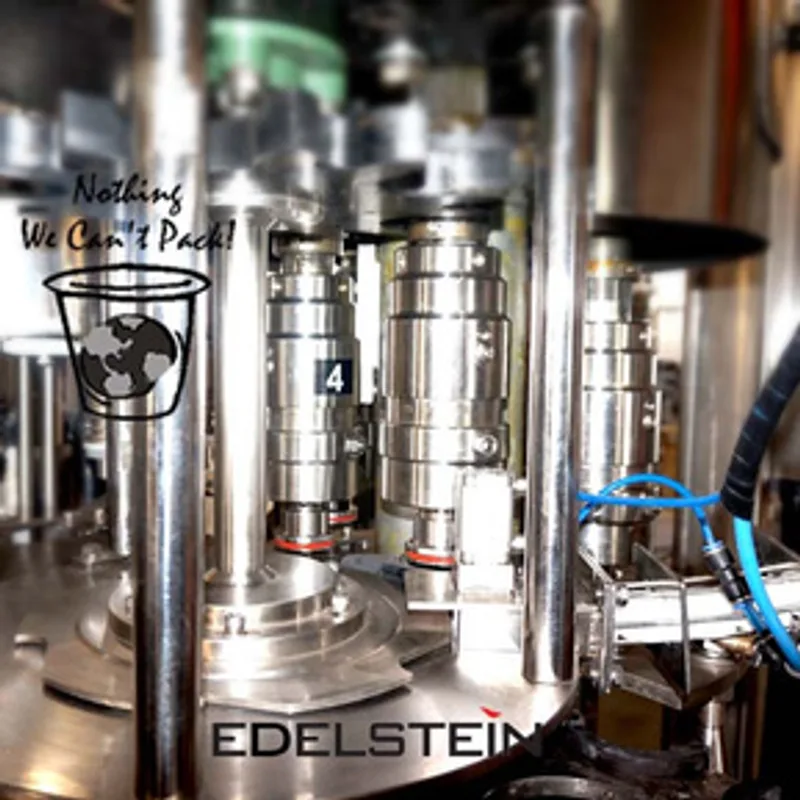
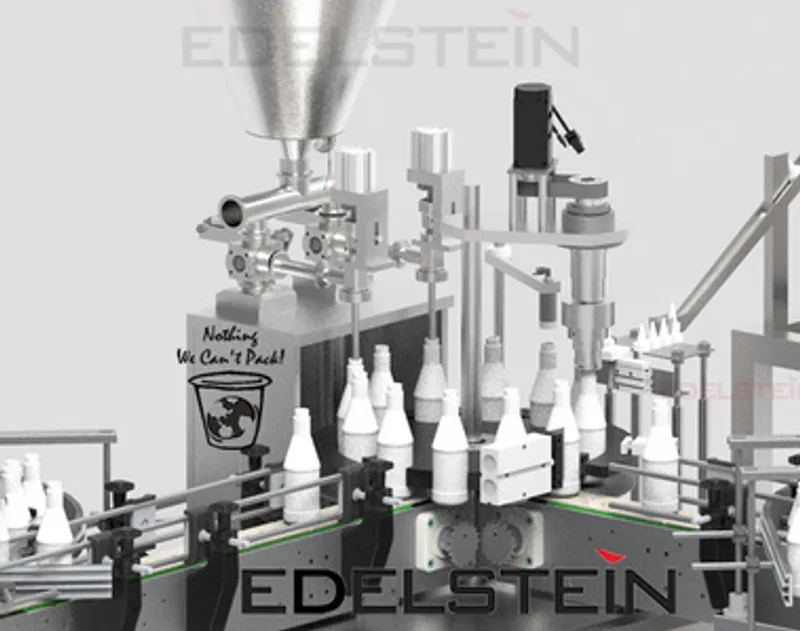
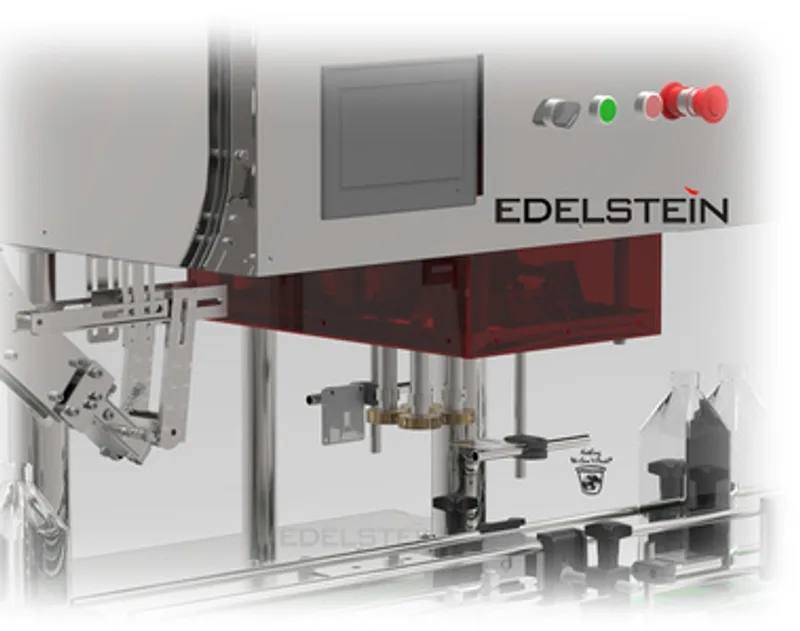
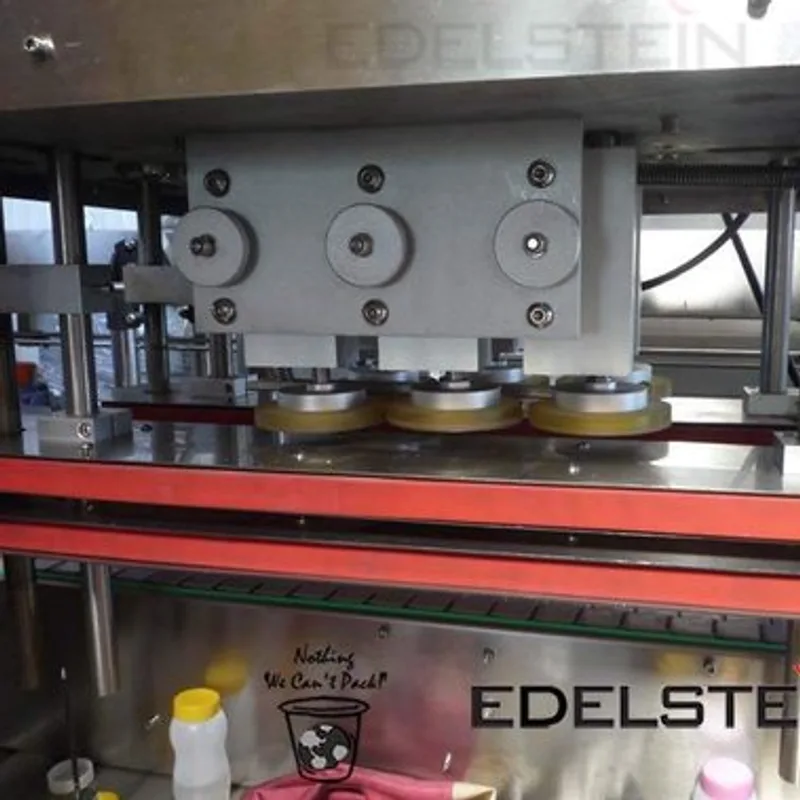
Plan a complete bottle packaging process built around your product characteristics, bottle type, closure method, production speed target, and automation level — before selecting any single piece of equipment.
From bottle sorting and air rinsing to filling, capping, induction sealing, labelling, and secondary packaging: EDELSTEIN helps you define the right production sequence and engineering specification so machinery is evaluated against a clear brief.
Most bottle packaging buyers begin by specifying the filling machine. This approach almost always results in budget surprises, line integration problems, and machines that cannot run at the required speed because upstream and downstream equipment was treated as an afterthought.
A complete bottle packaging line involves a minimum of six process stages — container infeed, rinsing, filling, capping or closing, sealing, and secondary packaging — each of which must be specified, purchased, and integrated with the others. Conveying equipment, accumulation systems, inspection stations, and reject mechanisms must be designed into the line from the start, not added as corrections after installation.
The bottling line planning approach used by EDELSTEIN starts from the product and the production target, works through each process stage in sequence, and produces an integrated line specification before any single machine is evaluated. This sequence is described in the sections below.
Section 2 of 10
Suitable Applications
Bottle packaging lines serve a wide range of product sectors. The process sequence, filling technology, closure method, and hygiene requirements vary across these applications.
Application type determines filling technology, material contact specifications, closure method, and cleaning requirements. Final equipment selection is confirmed only after product and process parameters are reviewed with our engineering team.
Section 3 of 10
Common Challenges in Bottle Packaging
These are the most common performance problems reported by operators of existing bottle lines — and the engineering questions that must be answered before any solution is proposed.
Unstable Filling Accuracy
Fill weight or volume is inconsistent between bottles — some are light, some are heavy — across a single run.
Is the variance random or systematic? Does it track with bottle temperature, product temperature, or machine speed? Is the filling nozzle worn or leaking between cycles? Is the product aerated?
Foaming or Overflow During Filling
Product foams at the filling point, overflows the bottle neck, and contaminates the capping and sealing area.
Is the foaming driven by fill speed, nozzle submersion depth, or product aeration during tank agitation? Does it change with temperature or product batch? Is a bottom-up or counter-pressure filling approach applicable?
Bottles Tipping or Jamming
Bottles tip over on the conveyor or jam at machine entry points, stopping the line and requiring manual recovery.
Is the bottle base diameter too small relative to height (centre of gravity problem)? Is conveyor speed too high at transfer points? Are the bottle guide rails correctly set for the container dimensions? Is the infeed pressure too high?
Inconsistent Cap Placement or Torque
Caps are applied at an angle, are cross-threaded, or are applied with inconsistent torque — resulting in leakage or consumer complaints about caps that are too tight or too loose.
Is the cap feeder delivering caps in the correct orientation? Is the bottle neck finish consistent across the bottle supplier's production? Is the torque head calibrated and wearing correctly?
Leakage or Unreliable Sealing
Bottles are leaking in transit or on retail shelves — through the cap, liner, or induction seal.
Is the induction sealer power level matched to the foil liner type and container material? Is the closure torque correct and consistent? Is the bottle neck finish free from contamination before sealing?
Integration Problems Between Machines
Individual machines operate correctly in isolation but the line runs below specification speed because of bottlenecks, timing mismatches, or unstable product transfer between equipment.
Was the line designed as an integrated system or assembled from separately purchased machines? Are accumulation conveyors sized for the speed differential between fastest and slowest machine? Is line control centralised or managed machine by machine?
Section 4 of 10
The Bottle Packaging Production Flow
A complete bottle line moves through six process stages. Each stage must be matched in speed to the others and connected with appropriate conveying and accumulation equipment.
1 — Sorting
Bottles are bulk-loaded, oriented upright, and singulated for entry into the filling line. Unscramblers or rotary tables handle this stage.
2 — Rinsing
Bottles are inverted and rinsed with ionised air, water, or sterile air to remove particulate contamination before filling. Required for food and pharmaceutical applications.
3 — Filling
Product is dosed into bottles by volume or weight. Filling technology is selected based on product viscosity, foaming characteristics, and accuracy requirement.
4 — Capping
Closures are sorted, oriented, and applied to the filled bottle. Cap type (screw cap, press-on, pump, disc-top, trigger) determines the capping machine format.
5 — Sealing
Induction heat sealing applies a foil liner to the bottle neck under the cap, providing tamper evidence and extended shelf life. Shrink sleeve or label application may follow.
6 — Secondary Packaging
Labelled and sealed bottles are counted, grouped, and loaded into cartons, trays, or shrink film for case packing and palletising.
Not every line includes all stages. Lines for non-food products may omit rinsing; some products do not require induction sealing. The flow is adapted to the specific application in the engineering specification stage.
Section 5 of 10
Engineering Decisions Before Machinery Selection
These are the fourteen questions that must be answered before any bottle packaging machine is specified. Unanswered questions at the start of a project become expensive surprises during installation.
What is the product viscosity (cP) at filling temperature, and does it change seasonally?
Does the product foam, aerate, or degas during filling? At what conditions?
What is the required fill volume range, and what fill accuracy is required (±% or ±g)?
What bottle materials, sizes, and neck finish dimensions are in the SKU range?
What closure type is used — screw cap, press-on, pump, trigger, disc-top, or other?
Is induction sealing or tamper-evidence required? What liner material is specified?
What is the required production speed (bottles per minute or bottles per hour)?
How many SKU changeovers are required per week, and what is the acceptable changeover time?
What labelling method is required — pressure-sensitive, OPP hot glue, sleeve shrink, or no-label?
What date coding method is required — inkjet, laser, thermal transfer, or print-and-apply?
Are there applicable food safety, pharmaceutical GMP, or chemical handling standards that govern machine design?
What CIP (clean-in-place) or manual cleaning protocol is required between product changes?
What utilities are available at the facility — compressed air pressure/volume, electrical supply, water, and drainage?
What floor footprint is available for the line, and what are the ceiling height and doorway clearance constraints?
Section 6 of 10
Filling Technologies for Bottle Applications
Filling technology selection is determined by product viscosity, foaming behaviour, the required fill accuracy, and whether level filling or volumetric filling is required. These seven technologies cover the full range of bottle filling applications.
Time-Gravity Filling
Low ViscosityFree-Flowing
Product flows by gravity through open nozzles for a timed interval. Simple and cost-effective for water-thin liquids at moderate speeds. Accuracy depends on consistent product viscosity and supply pressure.
Pressure Overflow Filling
Thin–MediumLevel Fill
Product is pumped under pressure into a bottle sealed around the nozzle. Fill level is controlled by an overflow return port — every bottle shows the same visible fill level regardless of slight container volume variation.
Pump Filling
Medium ViscosityFlexible
A servo-driven pump delivers a metered volume of product per cycle. Suitable for a wide viscosity range from thin sauces to thick creams. Easily adjusted for volume changes across SKUs.
Piston Filling
High ViscosityHigh Accuracy
A piston draws product from a hopper and dispenses a fixed stroke volume per cycle. High accuracy across thick, chunky, or particulate-containing products that other filling methods cannot handle reliably.
Vacuum Filling
Low–MediumAnti-Drip
A vacuum draws product into the bottle to a set level, with overflow returned to the tank. The vacuum mechanism eliminates dripping at the fill point and is well suited to wine, spirits, and similar products.
Equal-Level Filling
Level FillPresentation
All bottles are filled to exactly the same visible level. Used where shelf presentation is a marketing requirement and slight volumetric variation between bottles is acceptable.
Counter-Pressure Filling
CarbonatedFoaming
The bottle is pre-pressurised with CO₂ before filling to prevent carbonation loss and foaming. Required for beer, sparkling water, carbonated beverages, and any CO₂-containing product.
Section 7 of 10
Line Configurations
Bottle packaging lines are configured at three levels of integration depending on production speed, SKU complexity, and budget. The right configuration is determined by the production plan, not the initial capital budget.
01
Semi-Automatic Line
Operator manually loads bottles and monitors filling. Suitable for low-volume production (under 1,000 bottles per hour), start-up operations, or highly specialised products requiring manual inspection at each fill point. Lower capital cost; higher labour requirement per unit produced.
02
Automatic Single-Format Line
Fully automated filling, capping, and sealing for a single bottle format and product SKU. Bottle infeed, filling, capping, and discharge are fully mechanised. Changeover to a different bottle requires format part change and machine adjustment. Typical speed range: 1,000 to 12,000 BPH.
03
Multi-Format Integrated Line
A fully integrated line capable of handling multiple bottle sizes, closure types, and product SKUs through tool-less or quick-change format adjustment systems. Includes centralised line control, accumulation conveying between each machine, and automated rejection of non-conforming containers.
Section 8 of 10
Machinery Categories in a Bottle Line
A complete bottle packaging line draws from eight categories of machinery. Each category must be evaluated for compatibility with the others before purchase. Contact our engineering team for equipment matched to your production requirements.
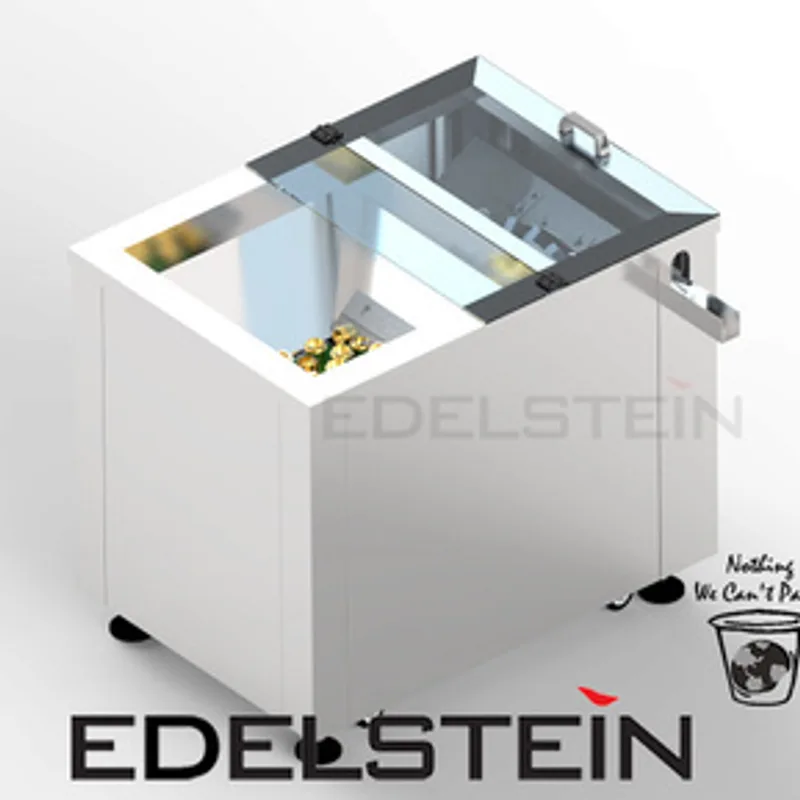
Bottle Unscrambler
Orients bulk-loaded bottles upright and feeds them onto the production conveyor at the required line speed.
Air / Water Rinser
Inverts and rinses bottles with ionised air or water before filling to remove particulate contamination. Required for food, beverage, and pharmaceutical lines.
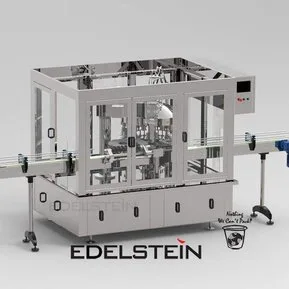
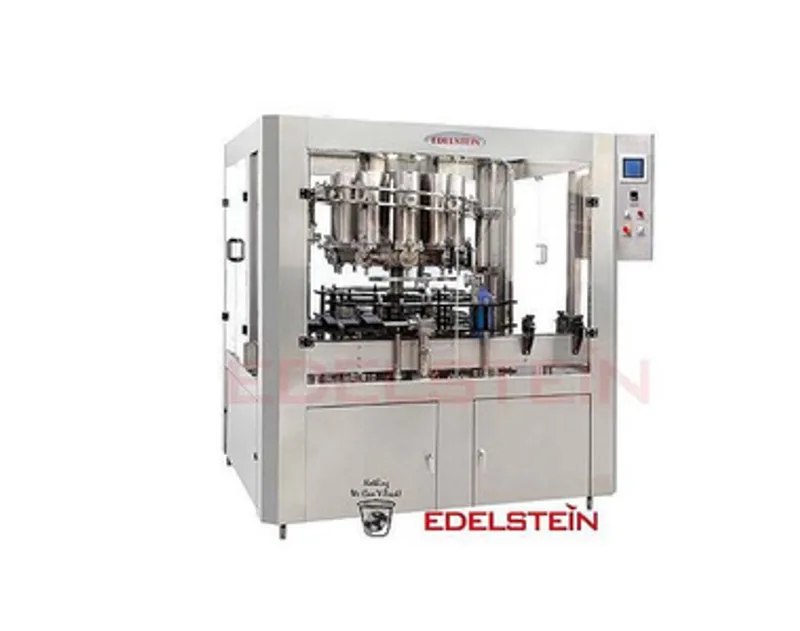
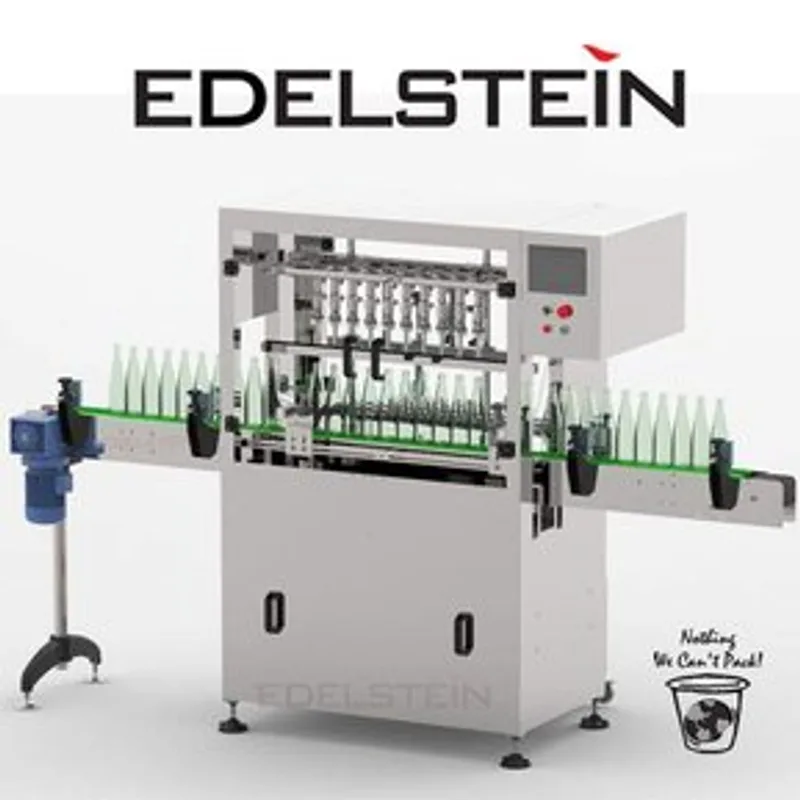
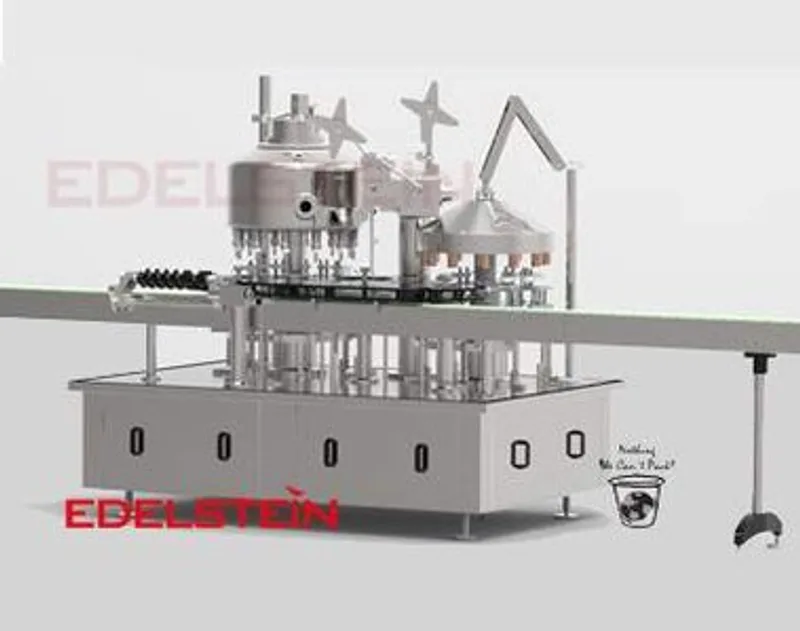
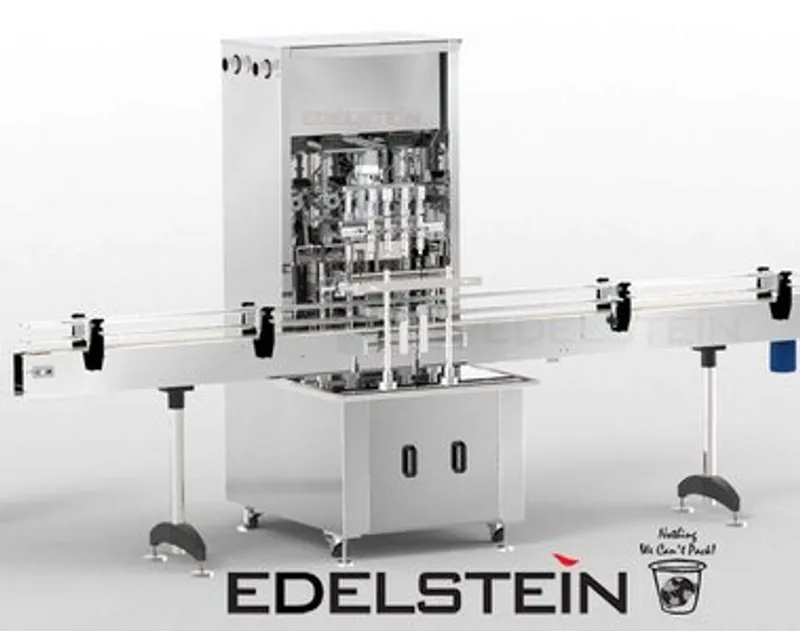
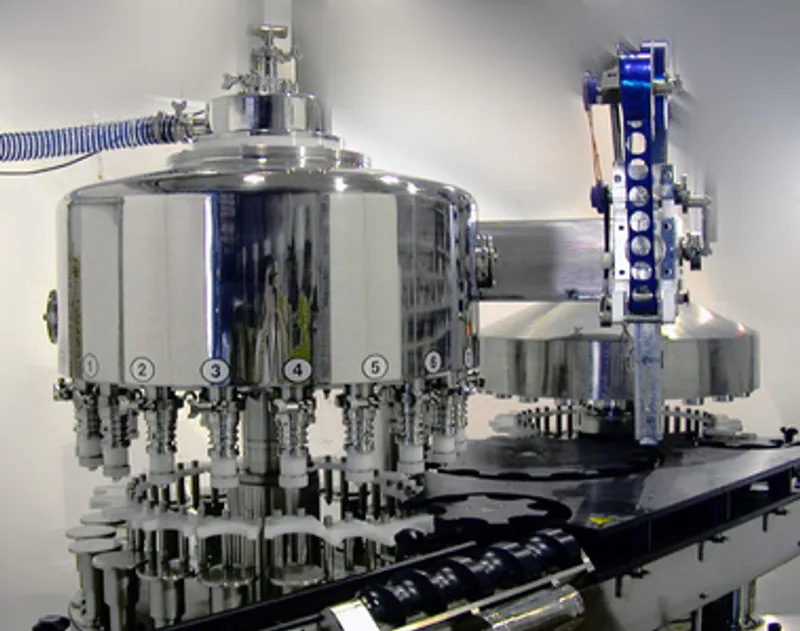
Filling Machine
Doses product into each bottle by volume or weight. Technology is selected from the eight filling methods below based on product and accuracy requirements.
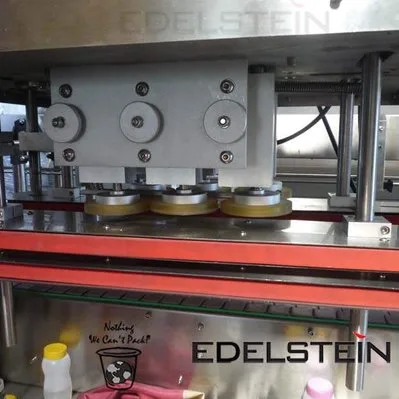
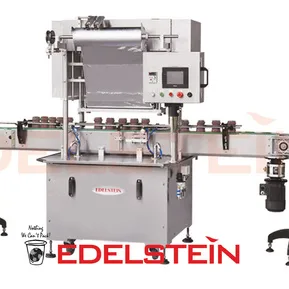
Capping Machine
Sorts, orients, and applies closures to filled bottles. Handles screw caps, press-on caps, pump dispensers, trigger sprayers, disc-tops, and other closure types.
Induction Sealer
Applies a foil liner seal to the bottle neck under the cap using electromagnetic induction heat. Provides tamper evidence and extends product shelf life.
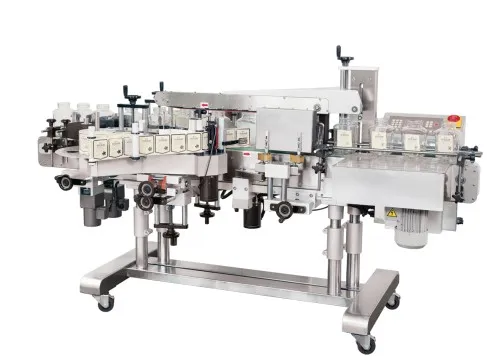
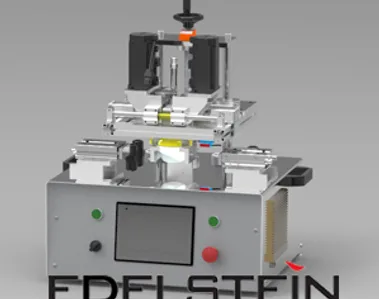
Labelling Machine
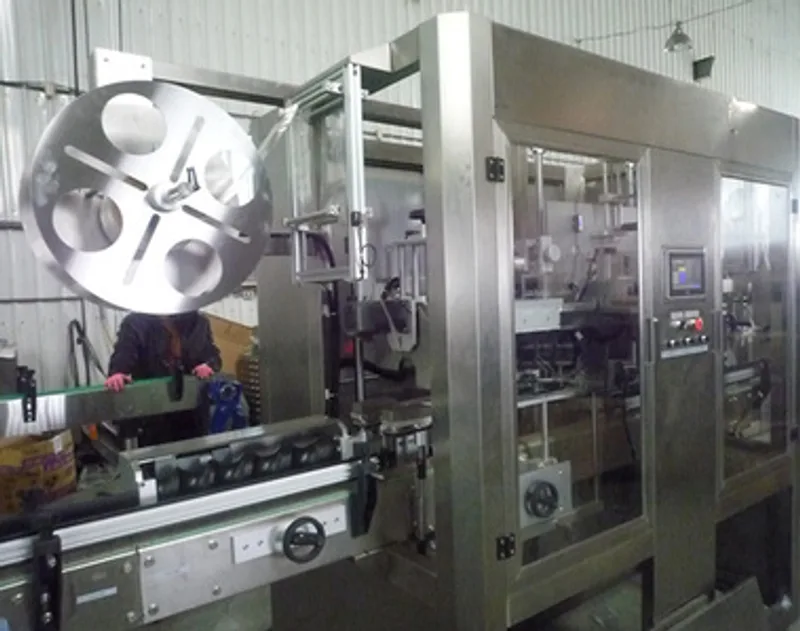
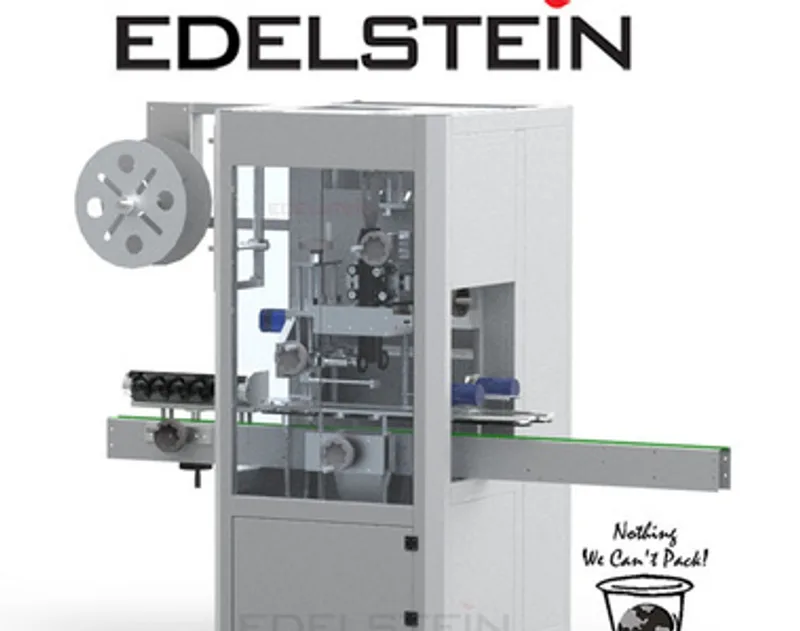
Applies pressure-sensitive, OPP hot-glue, or shrink sleeve labels to the bottle body, neck, and/or back panel. Front-and-back, wrap-around, and neck labelling configurations available.
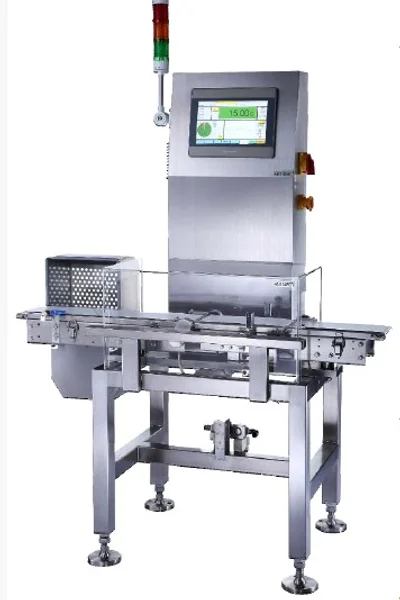
Check-Weigher
Weighs every filled and capped bottle in-line and rejects containers outside the acceptable fill weight range. Provides production data for process monitoring.
Case Packer
Counts and groups filled bottles and loads them into corrugated cartons, shrink film trays, or retail display units for distribution.
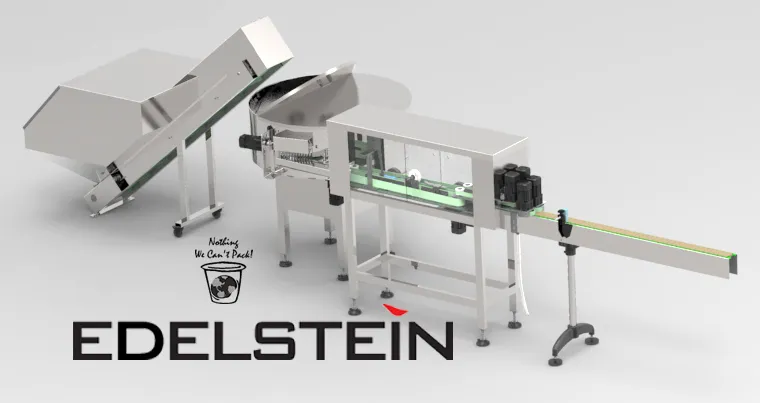
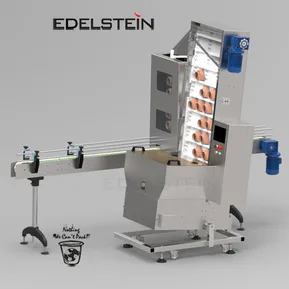
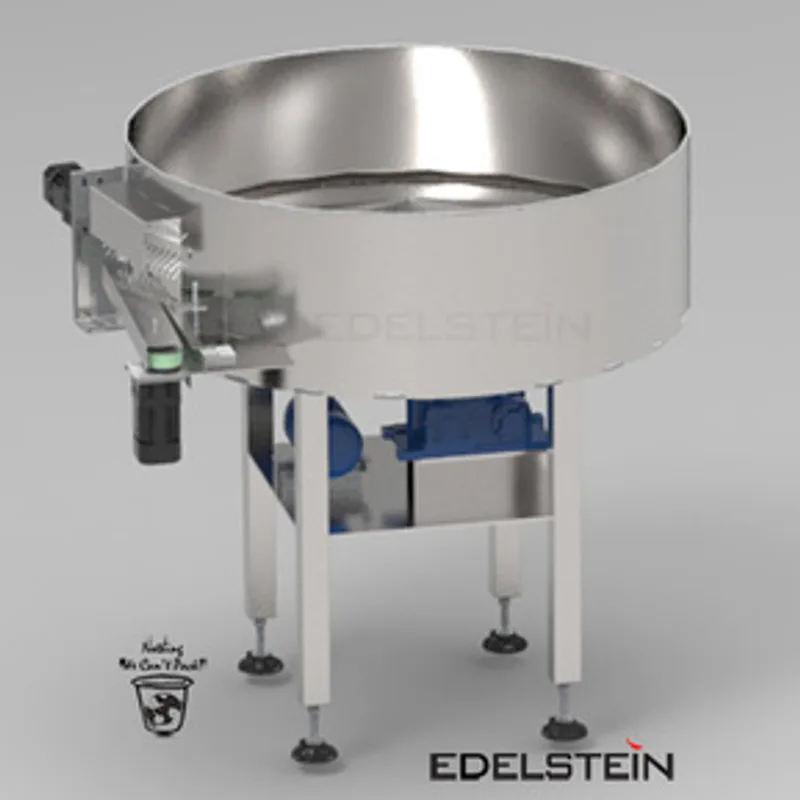
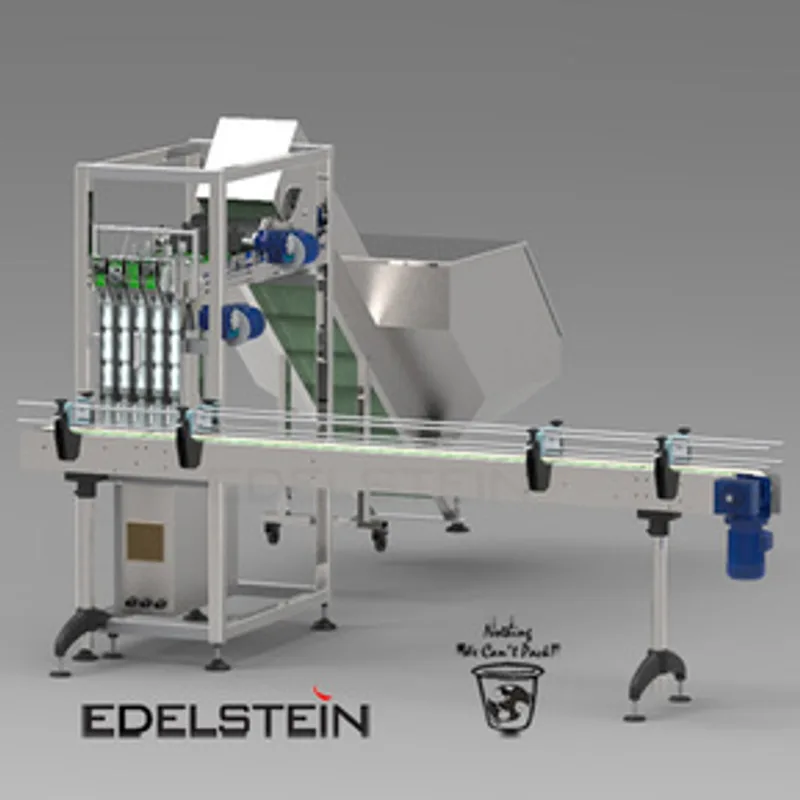
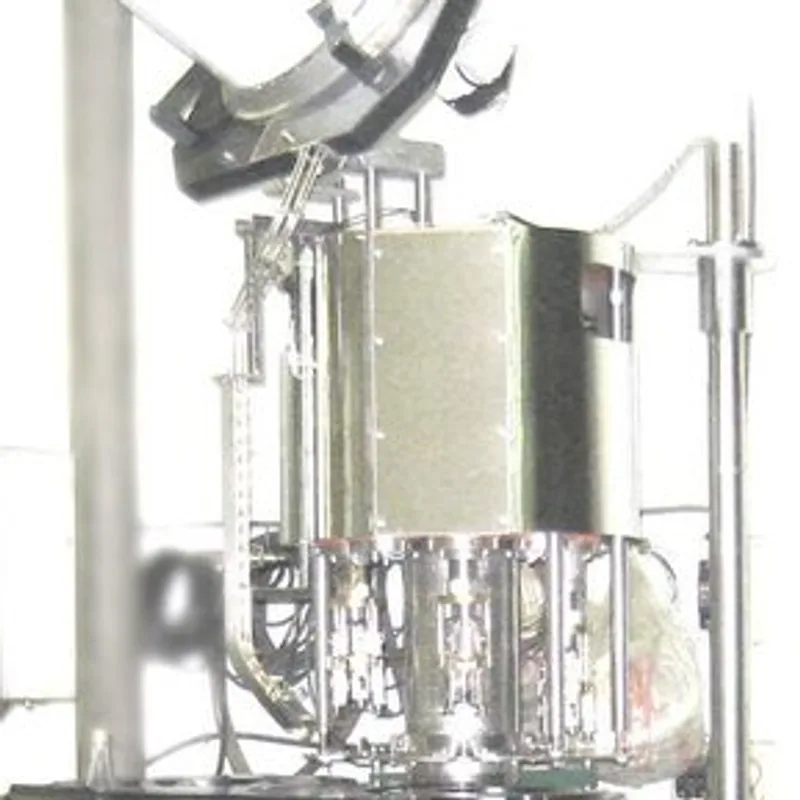
Bottle Unscrambler by Mechanism
The unscrambler above is matched to bottle shape and required line speed — one of seven mechanisms:
01
Centrifugal (with Cave)
Rotating drum design that relies on centrifugal force to sort and feed bottles — well suited to pharmaceutical plastic bottles and jars.
02
Linear
In-line feed and orientation for straightforward bottle shapes on small-to-medium lines.
03
Waterfall Lifting
Elevator lift combined with a waterfall action to orient and feed bottles into the line — balances footprint against throughput.
04
Horizontal Centrifugal
Horizontal-axis variant of the centrifugal design — a different footprint and feed geometry for layouts where a vertical cave doesn't fit.
05
Multi-Lane Vertical
Multiple vertical lanes sort, orient, and feed irregular-shaped bottles simultaneously.
06
Rotary
Rotating disc or table with pockets that receive and orient bottles — high-speed operation suited to large production volumes.
07
Vibratory Bowl
Vibration and gravity separate and orient bottles. Gentler handling for fragile containers, at lower production speeds than rotary.
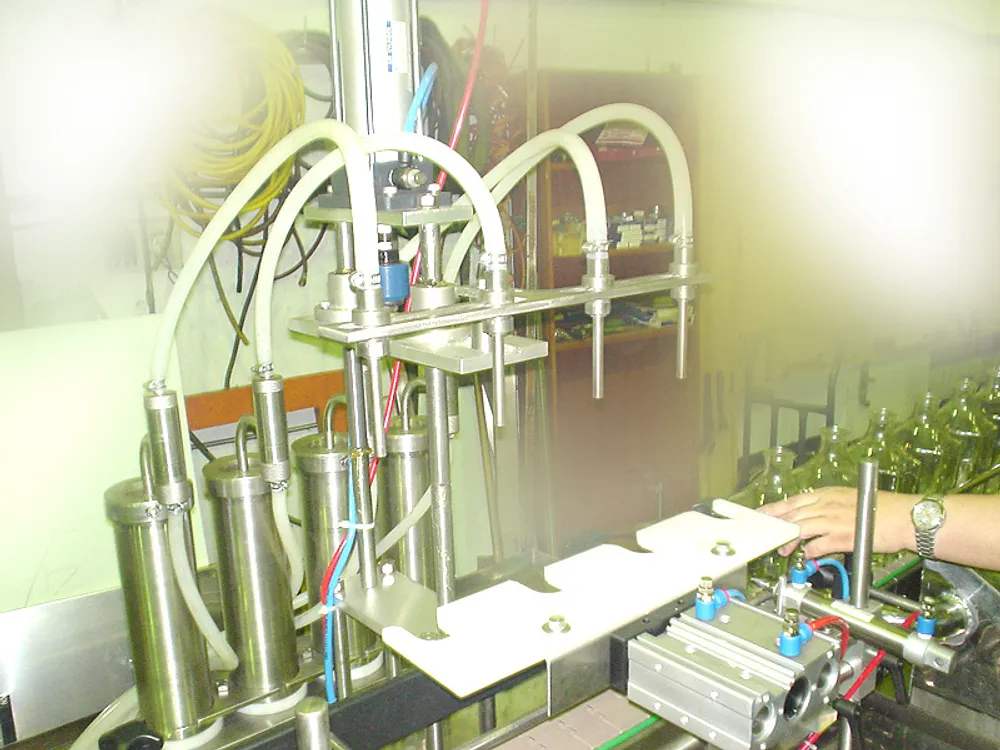
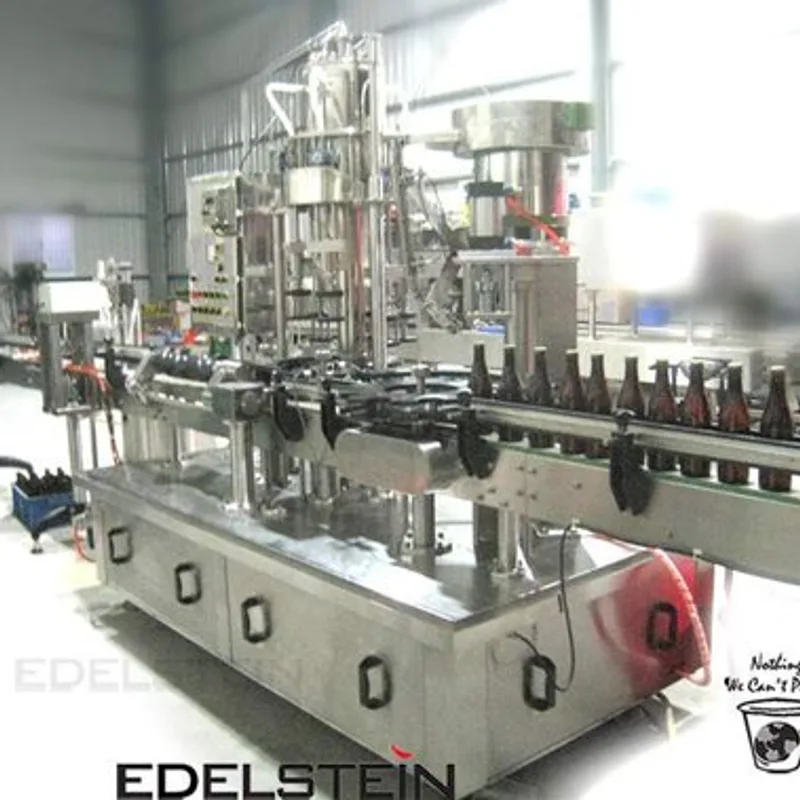
Filling Machines by Technology
The filling machine above doses product using one of these technologies, chosen by product viscosity, accuracy requirement, and whether the product is carbonated — most are available as rotary, in-line, or benchtop configurations:
01
Piston
For all viscosities, especially high-viscosity and paste-like products. Pneumatic, servo, or cam-driven rotary models with 12 to 32 filling stations.
02
Equal-Level
Maintains a constant, consistent liquid level across every container regardless of shape — float valve or air-pressure methods suited to water and beverages.
03
Vacuum
Draws a vacuum in the container so product flows in under pressure difference — rapid, foam-free filling for glass bottles of perfume, oil, vinegar, syrup, and spirits.
04
Time-Gravity
Timed-flow volumetric filling for low-to-medium viscosity liquids — high throughput where fill-accuracy requirements are moderate. 2 to 50 fill heads.
05
Pressure-Overflow
Fills to a precise level by overflowing excess liquid back to the reservoir — delivers a consistent fill line regardless of minor container volume variation.
06
Pump (Rotary Lobe)
Pump-driven transfer for high-viscosity liquids or products containing solids or fibers, without damaging product shape or texture. Fill accuracy typically within 1% of target volume.
07
Isobaric (Counter-Pressure)
Pressurizes the bottle with CO2 before liquid enters, then fills under counter-pressure to prevent carbonation loss — for soft drinks, beer, and sparkling wine.
08
Flowmeter
Digital flow meters measure liquid precisely as it dispenses, holding accuracy across varying viscosities and container types. Available as rotary, in-line, or manual.
Solid and semi-solid products are dosed by one of three further methods: volumetric (fixed-volume cup or chamber), weighting (filled to a target weight on a load cell), or auger (metered screw dosing for powders and granules).
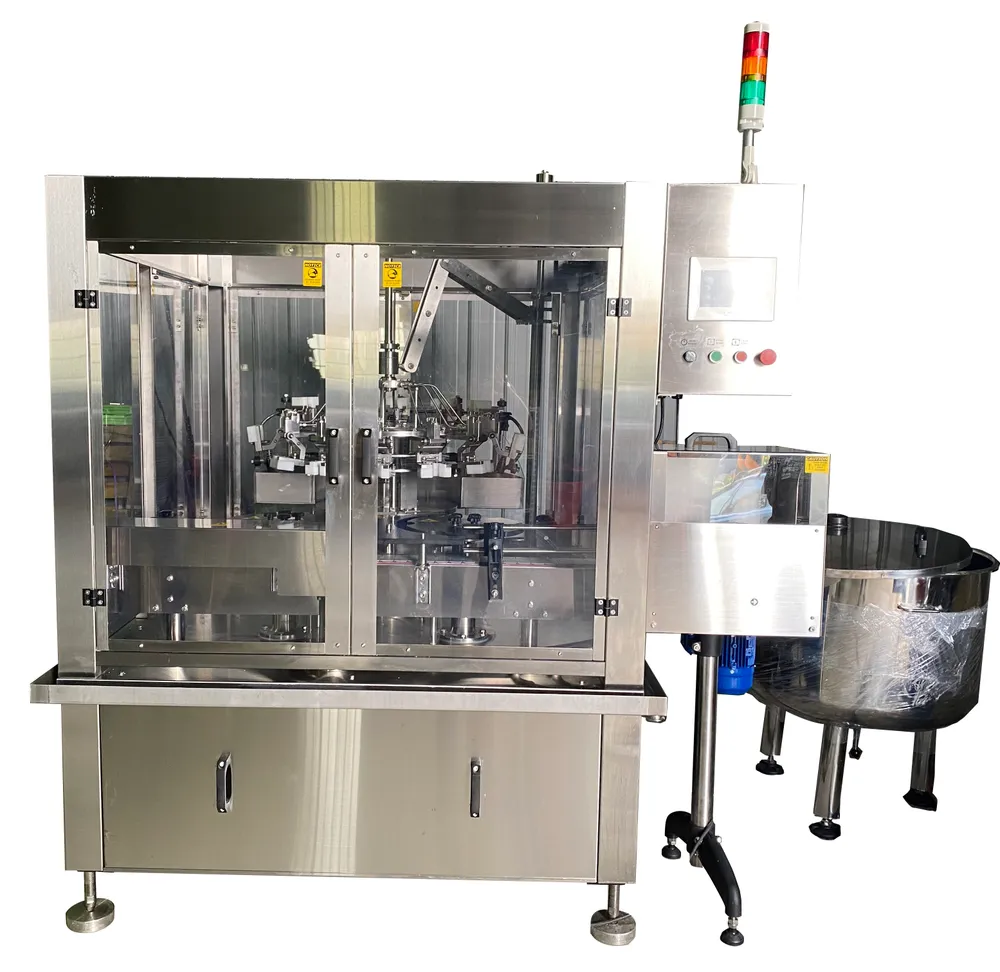
Capping Machines by Production Scale
The capper above is specified around one of four mechanisms, chosen by line speed and format-change frequency:
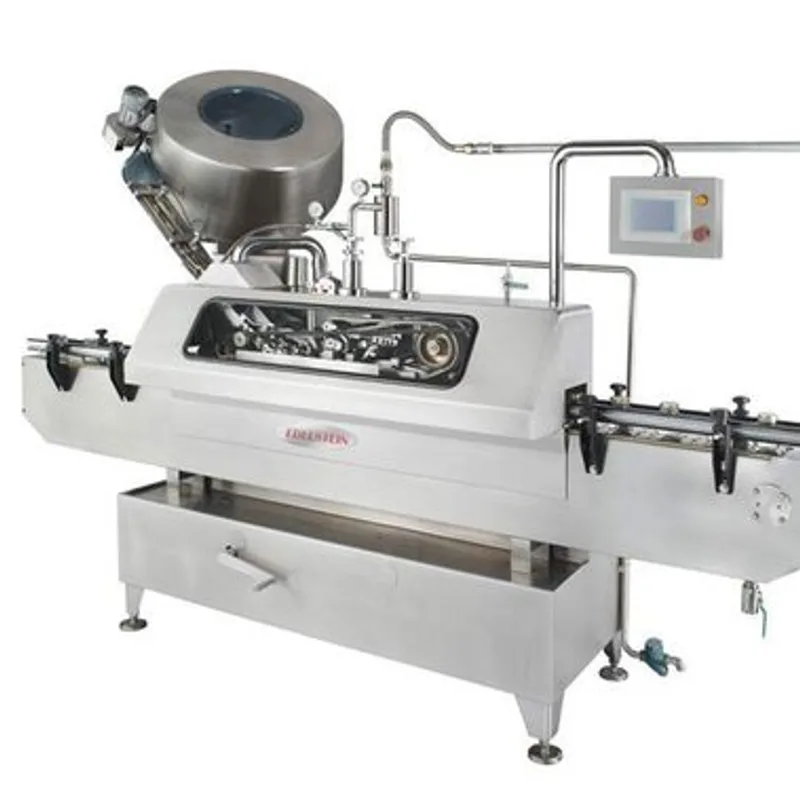
Linear spindle roller (screw), linear ROPP, linear snap-on, linear twist-off/vacuum, or multi-spindle roller — lower cost of entry and faster format changeover than rotary.
03
Manual / Tabletop Capping
Spindle, chuck, claw, or snap-type hand-operated cappers for trial runs, R&D batches, or very low production volumes.
04
Monobloc Filling-Capping
Combines rinsing, filling, and capping on one chassis — reduces footprint and the number of container-handling transfers between stages. Specified as a 2-in-1 (fill + cap), 3-in-1 (rinse + fill + cap), or 4-in-1 (rinse + fill + cap + seal) combination, in rotary, linear, or disc configuration.
Capping Machines by Cap Type
Independent of the production-scale mechanism above, the capping head itself is matched to the closure your product uses:
01
Screw / Thread
Applies standard screw-on plastic caps. The most common closure type, available in automatic, semi-automatic, in-line, rotary, and benchtop configurations.
02
ROPP (Roll-On Pilfer-Proof)
Rolls and forms an aluminum cap onto the bottle thread in place, creating a tamper-evident band that breaks on first opening. Common on spirits and oils.
03
Crown
Crimps a traditional crown cap onto the bottle finish — beer and craft-beverage lines, compact configurations available for small-batch breweries at 20-30 bottles/min.
04
Snap-On
Presses non-threaded caps on in a single downward motion — belt, roller, or plunger drive. Handles milk jugs, dropper inserts, lip balm caps, and overcaps at 120+ caps/min.
05
Crimping
Crimps pump or spray caps onto perfume and cosmetic bottles with pneumatic or hydraulic force — common pump diameters 13/15/18/20mm, hundreds of bottles per hour.
06
Lid Press
Presses a non-threaded lid down onto the container rim — mechanically the same family as snap-on, integrated with cap sorters and bulk feed elevators.
07
Twist-Off (Vacuum)
Applies vacuum and steam for a secure seal on glass bottles and jars — 3, 4, or 6-claw cap configurations, used for preserved and bird's nest products.
08
Plug
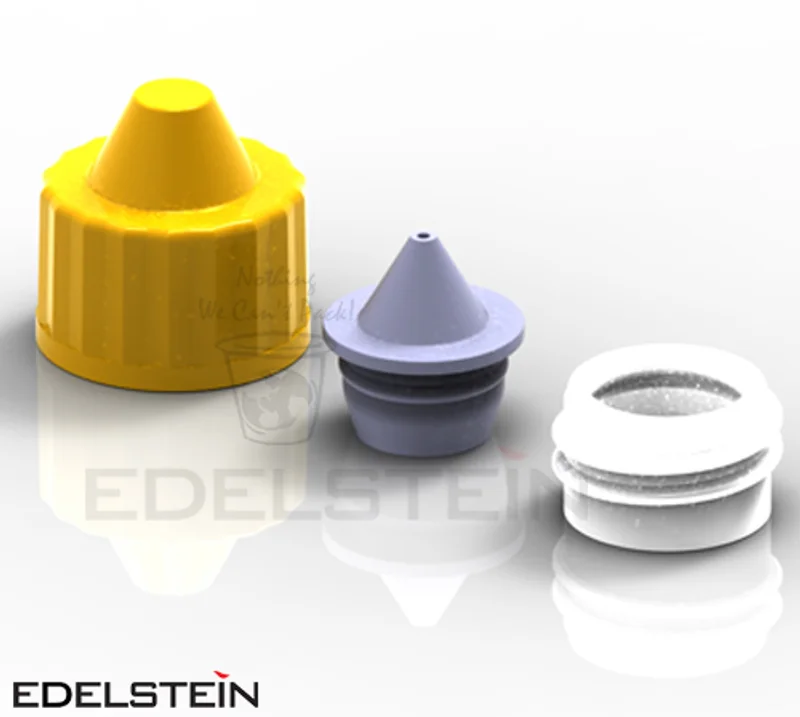
Inserts plastic or rubber plugs, stoppers, reducers, droppers, and sealing plugs into the bottle neck — a distinct insertion motion rather than a rotary or press closure.
09
Chuck
A rotating turret of chuck capping heads applies simultaneous, precise torque for a tight, leak-proof closure — plastic and glass bottles across food, beverage, pharma, and cosmetics.
10
Cone-Top / Yorker / Turret
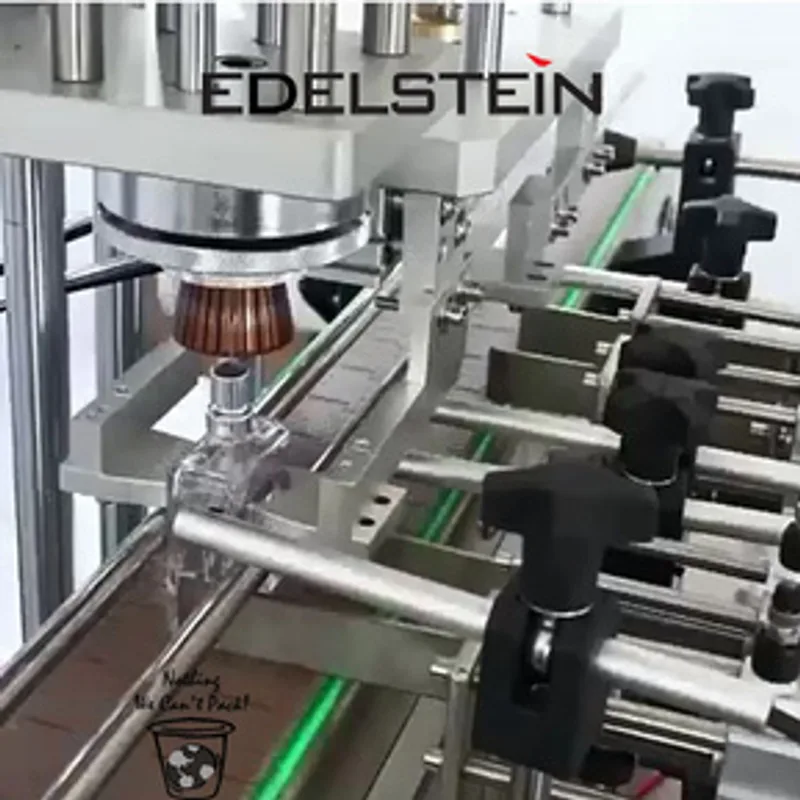
Dispensing-closure applicator for cone-top, yorker, and twist-off caps without damaging plastic components — magnetic or servo-driven heads with precise torque control.
11
Roller
Side-rotary wheels apply numerically adjustable torque via touchscreen, protecting caps from over-tightening damage — stainless 304, up to 150 caps/min in-line.
12
Multi-Spindle Roller
Detachable, angle-adjustable cap sliding track for smooth loading across round, square, flat, oval, polygon, or irregular container shapes — threaded, pump, flip-up, child-resistant, and tamper-resistant caps.
Dispensing closures (flip-top, disc-top, push-pull) and safety closures (tamper-evident, child-resistant, dropper) are typically applied by the Snap-On, Lid Press, or Cone-Top heads above, specified to the exact cap geometry.
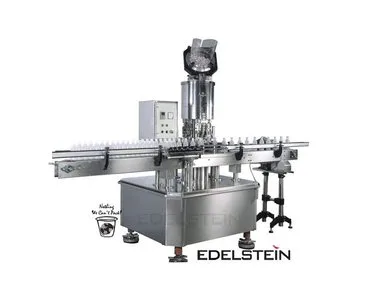
Sealing Machines by Mechanism
The induction sealer above scales by head count and conveyor integration:
01
Rotary Induction Sealer
Available in 12, 18, 20, 24, or 32-head configurations — head count is selected to match the capping and filling throughput already specified upstream.
02
In-Line Sealer
Conveyor-integrated unit for medium production applications, sized alongside the rest of a single-format line.
03
Manual Sealer
Operator-controlled unit for low production volumes, trial batches, or semi-automatic lines.
Labelling Machines by Mechanism
The labelling machine above is specified around one of three head configurations:
01
Overall / Wrap-Around
Applies pressure-sensitive, OPP hot-glue, or shrink sleeve labels around the full body in one pass — front, back, and wrap-around coverage in a single head.
02
Dual Head
Two independent labelling heads for higher throughput or for applying separate front and back labels in one pass through the machine.
03
Single Head
One labelling station for standard single-label operations — the lowest-cost entry point for lines that don't need dual-label or full wrap-around coverage.
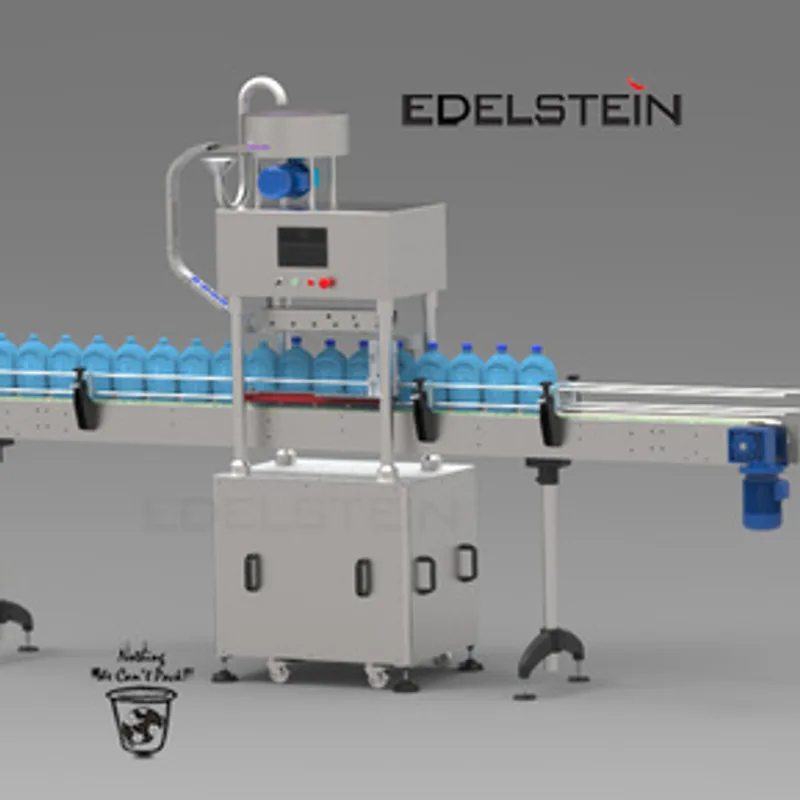
Jug & Large-Container Bottling (3-5 Gallon)
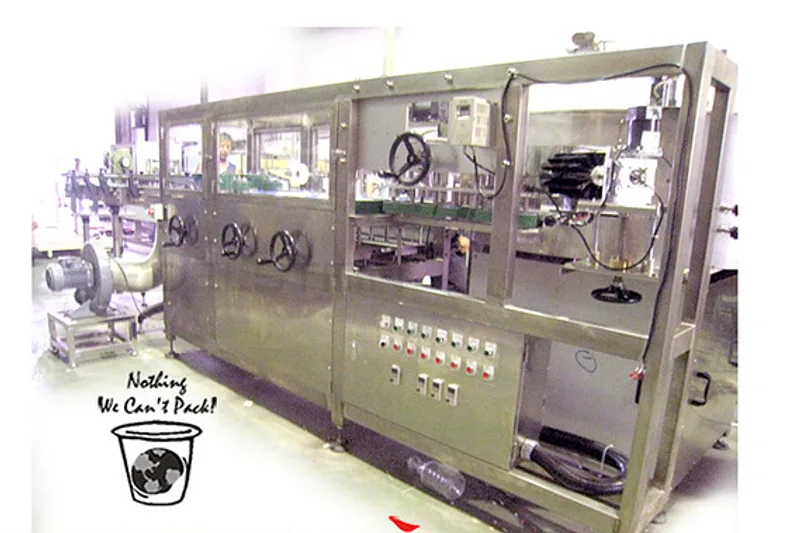
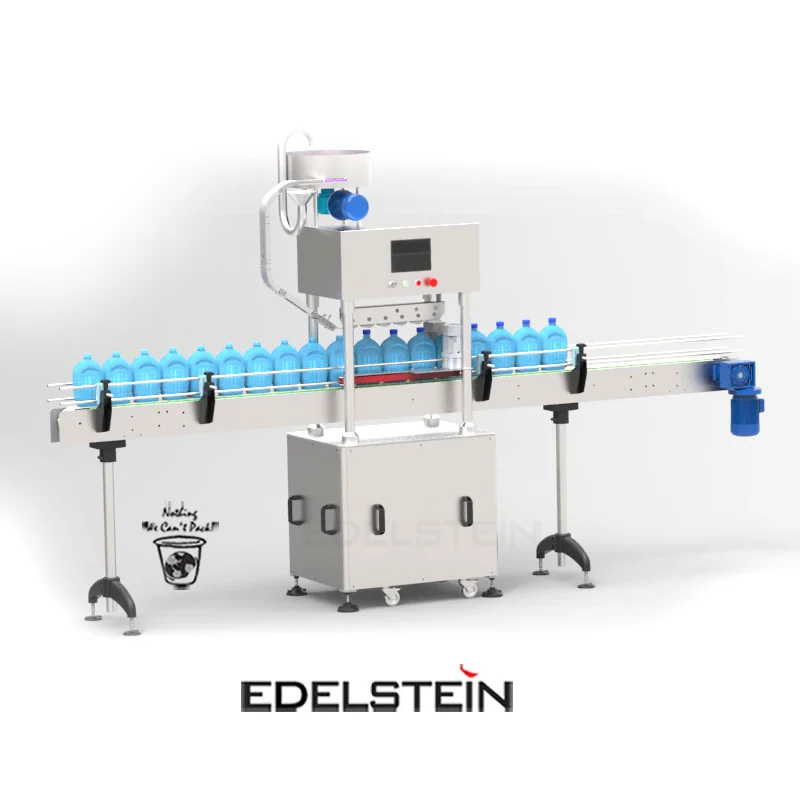
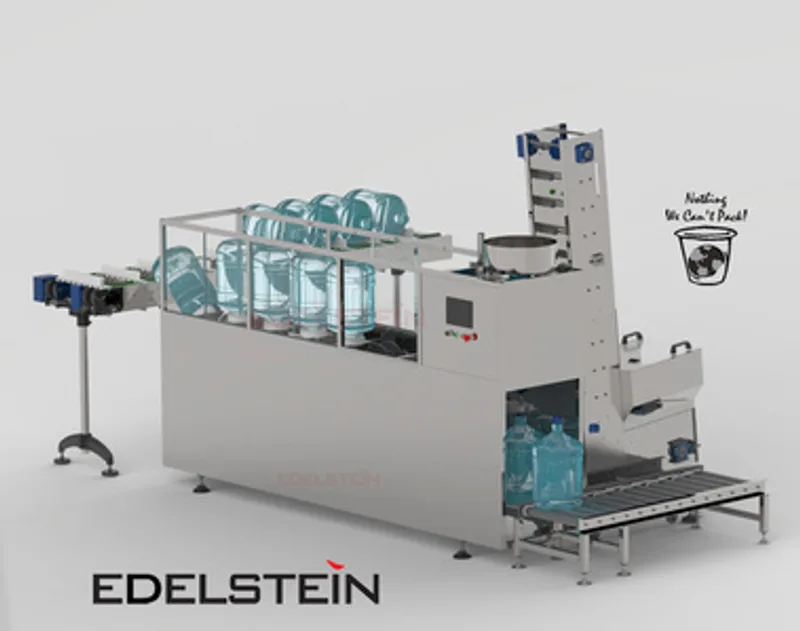
A dedicated washing-filling-capping monobloc sized for 3 and 5-gallon water jugs — a large-format variant of the same stages covered above, built around the jug's size and weight rather than standard bottle tooling.
01
Jug Washing-Filling-Capping Monobloc
Stainless steel construction, 60–150 jugs/hour depending on configuration. Multiple washing stages with high-pressure water jets, precise volumetric filling, and automatic capping, with an optional UV or ozone sterilization stage.
Section 9 of 10
Related Engineering Guides
Practical guides on the key decisions in bottle packaging line specification.
How do I know which filling technology is right for my product?
The primary selection criteria are product viscosity (measured in centipoise at filling temperature), foaming tendency, and whether level filling or volumetric filling is required. As a starting point: thin liquids that do not foam use gravity or pressure overflow filling; medium-viscosity products without particulates typically use pump filling; thick, chunky, or paste-consistency products use piston filling; carbonated or foaming products require counter-pressure or bottom-up filling. Our engineering team will ask for a product sample or datasheet before making a recommendation.
What fill accuracy can I expect from a well-specified bottle filling line?
Accuracy depends on the filling technology used and the product characteristics. Piston filling typically achieves ±0.5% or better on stable products. Pump filling typically achieves ±1% or better. Time-gravity filling is less precise — typically ±1–3% depending on product consistency and fill duration. Weight-based filling (net weight system) eliminates the effect of product density variation and typically achieves the tightest tolerances across SKUs, at higher equipment cost. Your legal minimum net quantity requirements should be shared with us during specification.
Can I run multiple bottle sizes and products on one line?
Yes — multi-format lines handle a range of bottle sizes and closure types using format part changeovers. For lines running three or fewer bottle formats with similar closure types, changeover is typically achieved through adjustment of guide rails, filling nozzle height, and capper torque settings — achievable in 30–60 minutes. Lines running many formats benefit from tool-less quick-change format parts that reduce changeover time to under 15 minutes. The critical parameter is how many changeovers per week are planned and how much production time is lost per changeover.
Do I need an induction sealer on every bottle line?
No. Induction sealing is required when tamper evidence, extended shelf life, or leak prevention through the cap interface are needed — typically in food, pharmaceutical, and premium personal care applications. Lines for products with short shelf life, non-food applications, or where the closure itself provides sufficient seal integrity may not require induction sealing. The decision should be driven by product requirements and regulatory obligations, not as a default inclusion.
How long does it take to install and commission a bottle filling line?
A semi-automatic single-machine installation typically takes 1–3 days. A fully automatic single-format line (filler, capper, sealer, labeller) typically requires 2–3 weeks for mechanical installation and 1–2 weeks for commissioning runs. A fully integrated multi-format line with conveying and secondary packaging equipment typically requires 4–8 weeks from first delivery to sign-off. These timelines assume the facility is ready — floor, power, compressed air, and water connections completed before machinery arrives.
What information do I need to provide to get an accurate equipment quotation?
To provide an accurate and comparable quotation we need: product name and type, viscosity at filling temperature, fill volumes and weight targets, bottle dimensions and materials (with drawings or physical samples if available), closure type, required production speed, and the facility's available utilities. Without this information, quotations are approximate and cannot be used to make investment decisions reliably. Our pre-quotation consultation is designed to collect these parameters efficiently — it typically takes 30–60 minutes.
Ready to Specify Your Bottle Line?
Share your product, bottle format, production speed target, and closure type. Our engineering team will review your requirements and provide a line specification recommendation, filling technology shortlist, and indicative budget range — at no cost and with no commitment.