Equipment Categories
Ten categories of supporting equipment cover most line integration requirements.
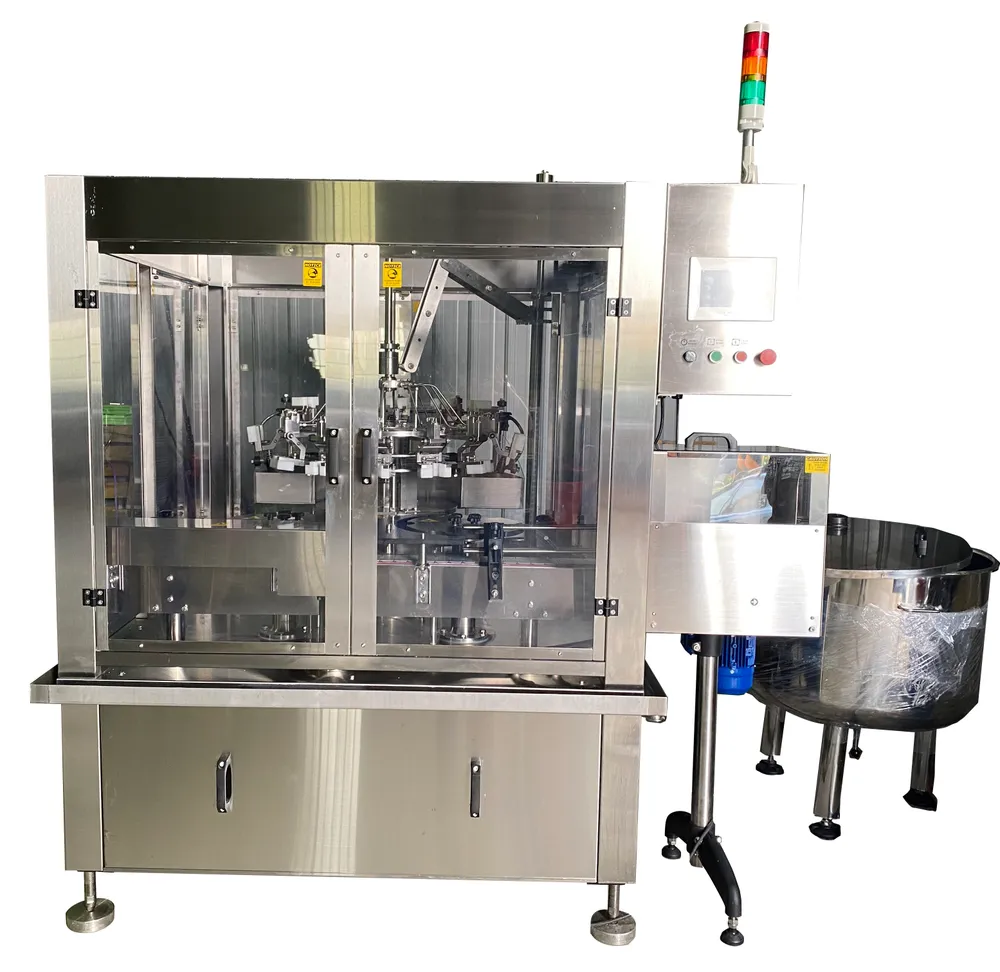
Bottle Rinser
Rotary machine that inverts bottles and sprays them with high-pressure water or air before filling, clearing dust and residue left over from storage and transport. Available as a 12-head configuration (around 3,600 bottles/hour) or a higher-throughput 24-head configuration. "No bottle, no rinse" sensing cuts water consumption between containers.
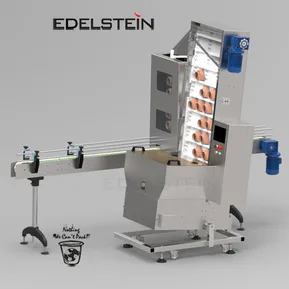
Bottle Unscrambler
Takes bulk-loaded empty bottles, orients them upright, and single-files them onto the conveyor — removes a manual loading step and keeps the line fed at a steady rate. Mechanism is matched to bottle shape and line speed: linear vibratory, horizontal or vertical centrifugal, centrifugal-with-cave, waterfall lift, or multi-lane vertical feed.
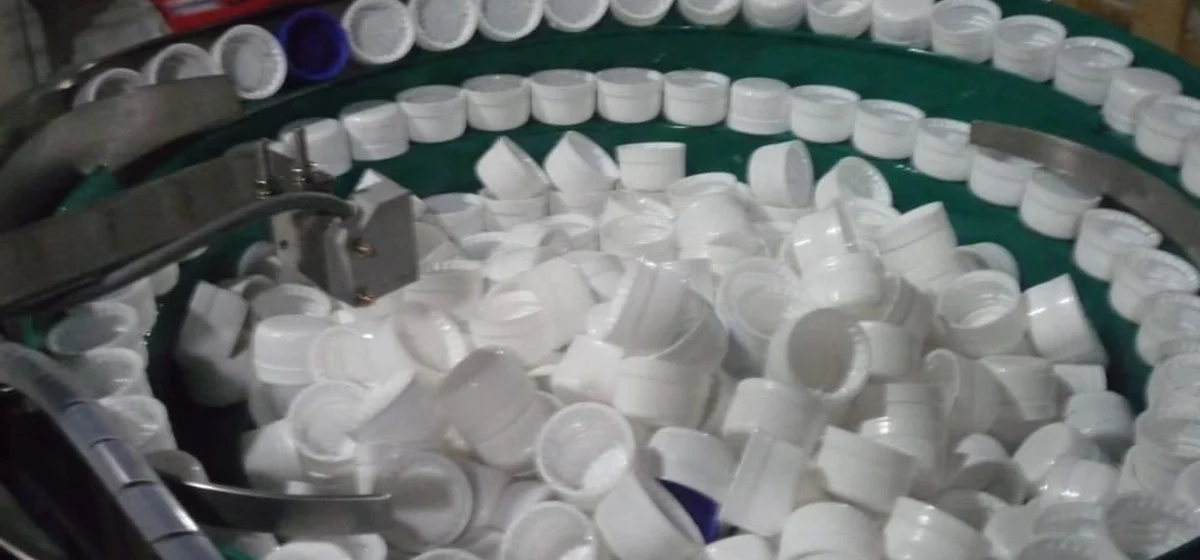
Cap Sorter & Feeder
Orients bulk-loaded caps and delivers them in a single-file chute to the capper, eliminating manual cap loading. Available as vibratory bowl, centrifugal disc, centrifugal-with-cave, or lifting-type feeders depending on cap shape and required feed rate.
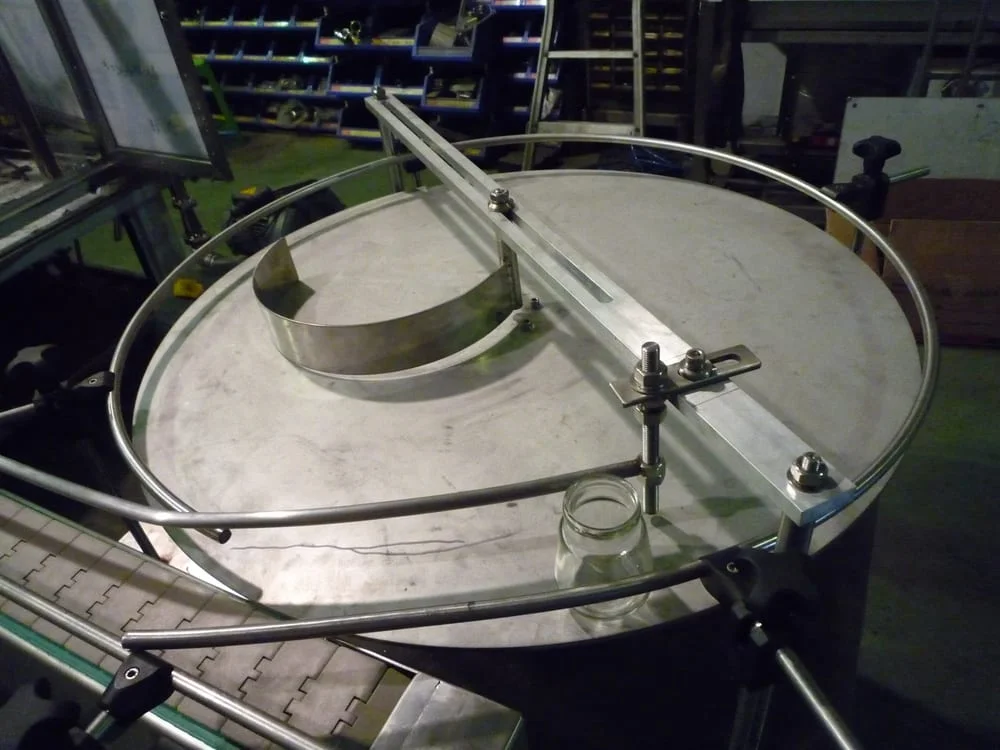
Accumulation Table
Rotary buffer table that absorbs short stoppages downstream (label jam, case-packer pause) without stalling the filler — keeps upstream machines running.
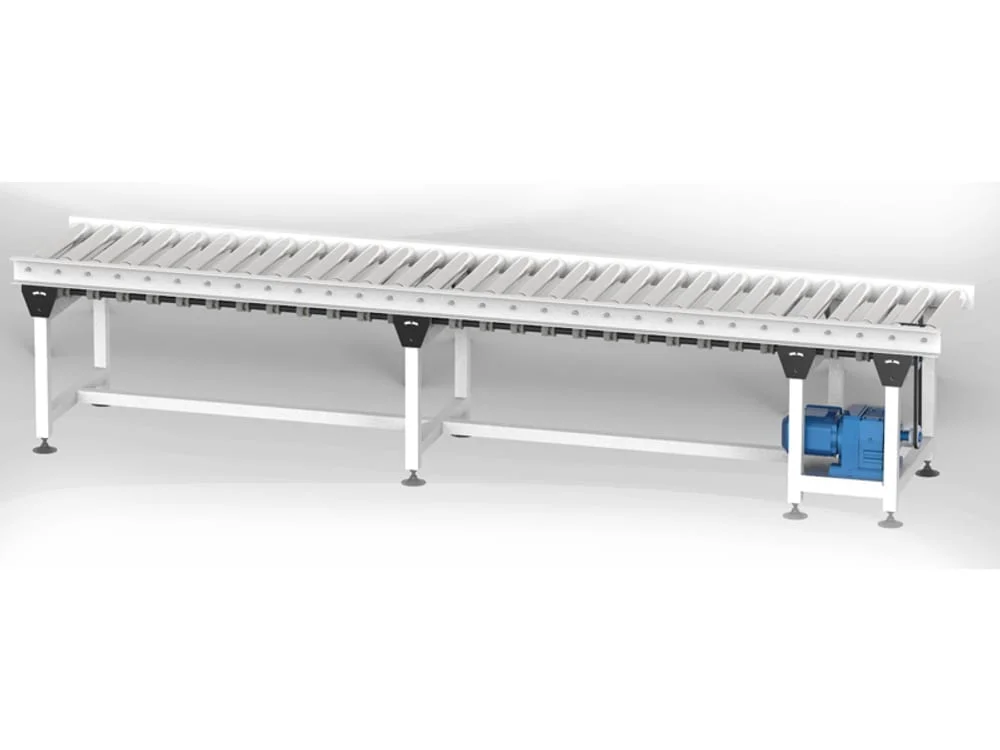
Transmission Conveyor
Roller or belt conveyor sized to match the throughput of the machines on either side of it — the most common cause of an under-performing line is a mismatched conveyor.
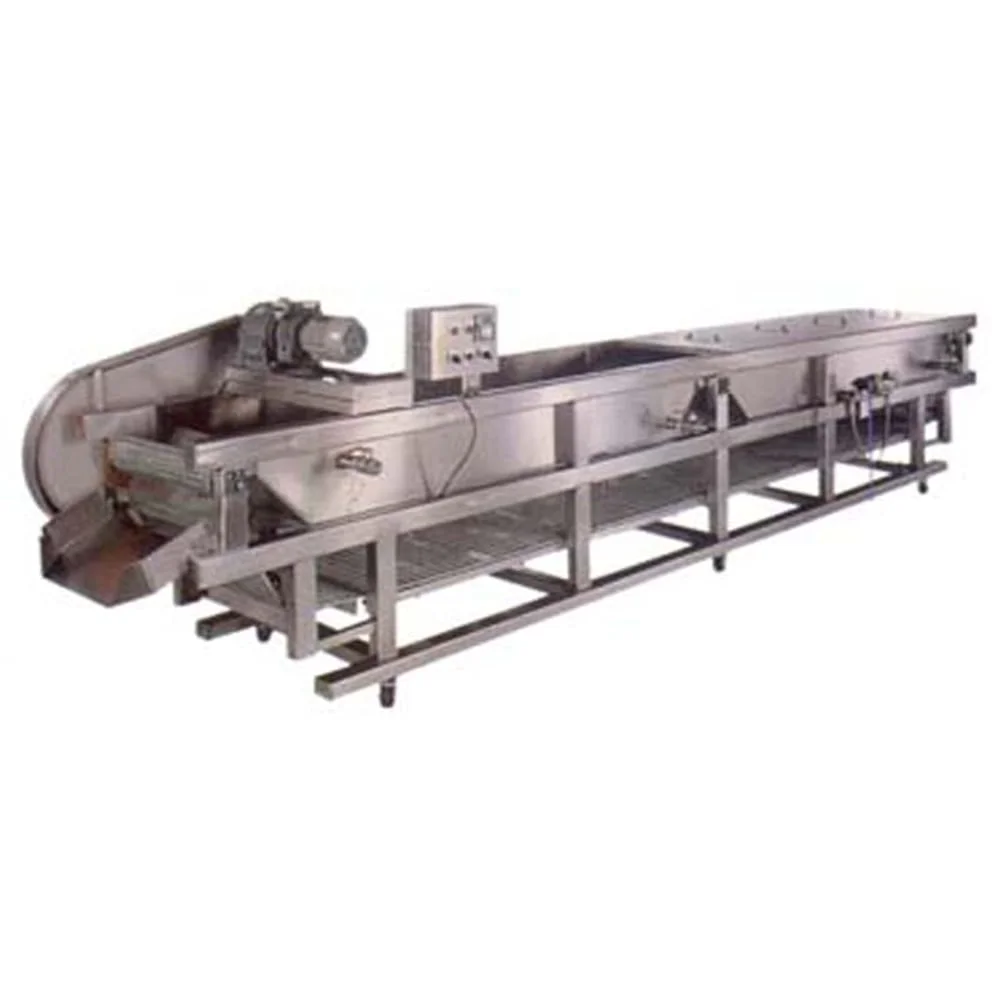
Sterilizer
Low-temperature sterilizing tunnel or chamber for containers, caps or components requiring a hygiene step before filling — used in food, dairy and pharmaceutical lines.
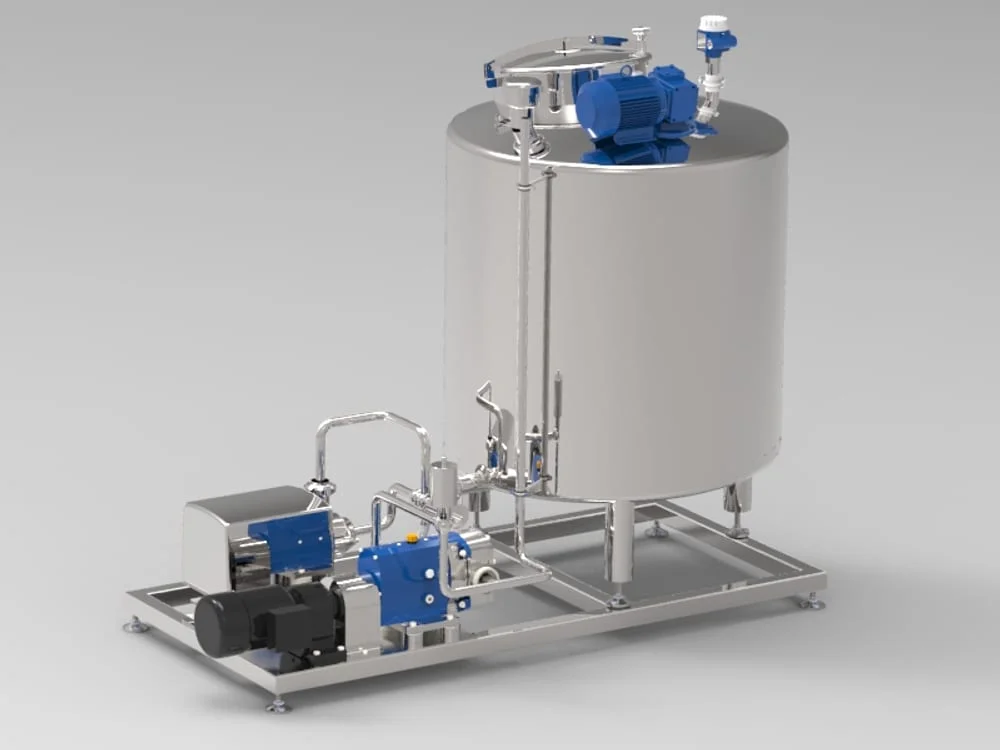
CIP System & Storage Tank
Clean-In-Place skid and jacketed storage/mixing tank for hygienic product holding and automated line cleaning between batches — standard on dairy, beverage and pharma lines.
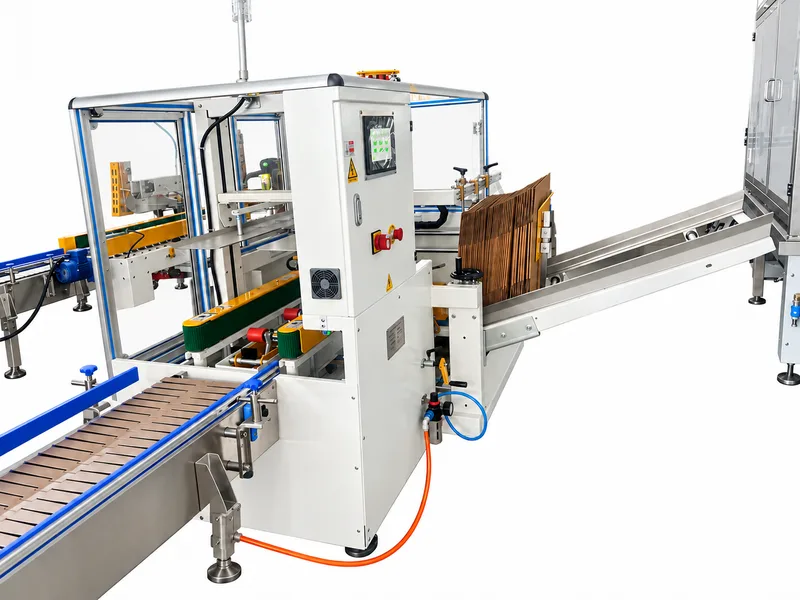
Carton Erector
Forms flat-pack cartons into shape and closes the bottom before product loading. Layer vacuum cartoning variants are available for loading multiple bottles or tubes per layer in one cycle.
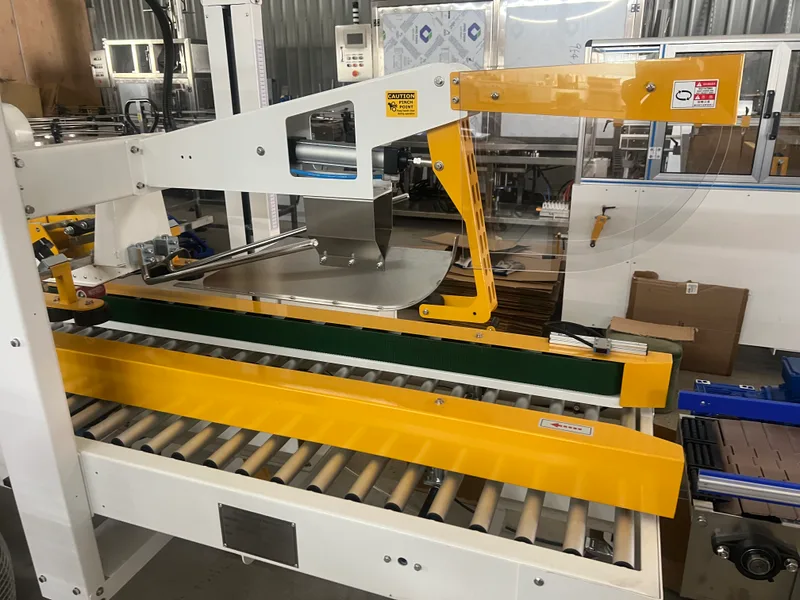
Case Sealer
Tape-type or hot-glue case sealing machine that closes and seals the top of the carton after product loading, in-line with the roller conveyor feeding the next station.
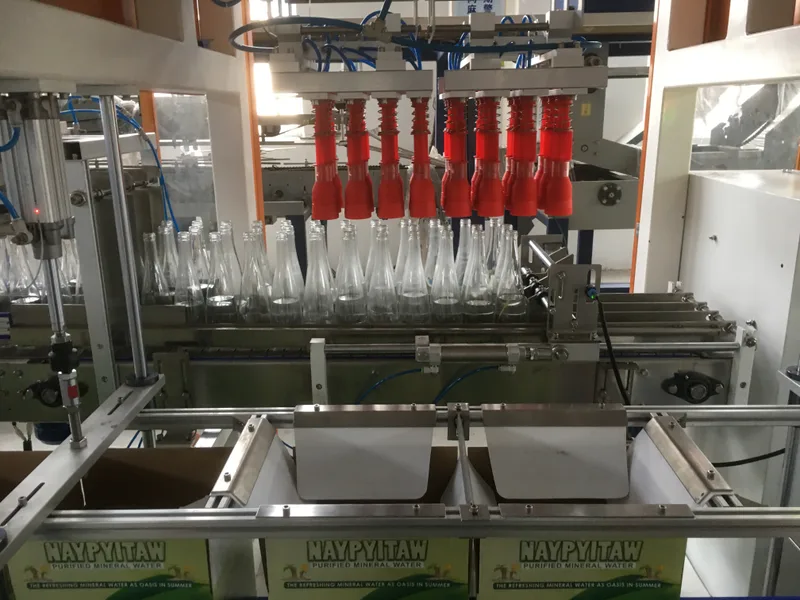
Case Packer (Grab Type)
Grab-type gripper arms lift glass bottles individually from the conveyor and place them into cartons below — gentler handling for containers that can't be vacuum-lifted in bulk.
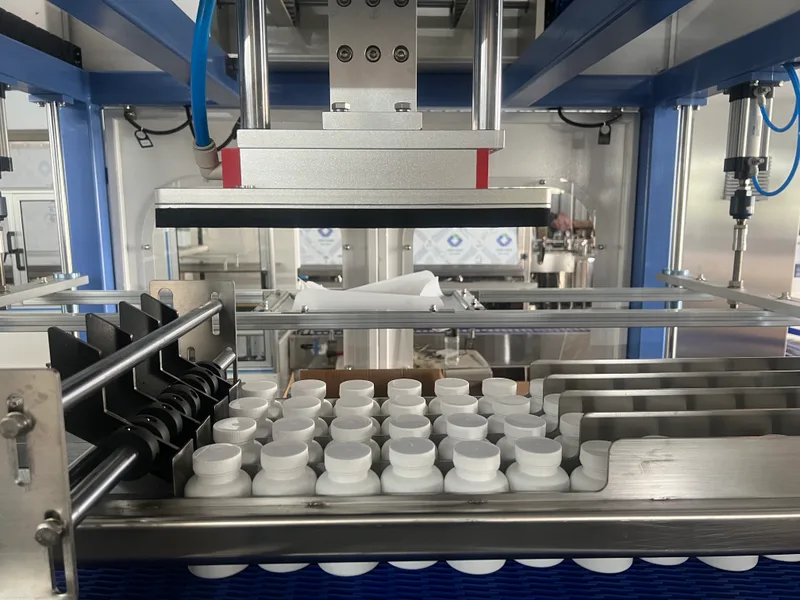
Case Packer (Vacuum Type)
Vacuum pick-up collates and loads pharmaceutical and plastic bottles into cartons in bulk for high-speed lines.
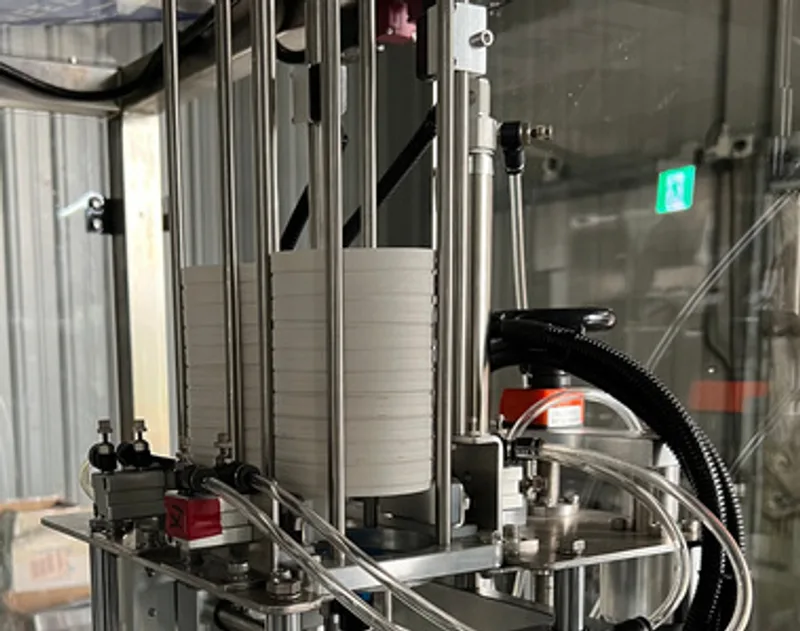
Denester
Separates and feeds stacked cups, trays, or containers one at a time onto the line using timing-screw or pneumatic pick, ahead of filling — available in cup, tray, and container configurations.
Cap Sorter by Mechanism
The cap sorter above is specified from one of four feed mechanisms, chosen by cap shape and required feed rate:
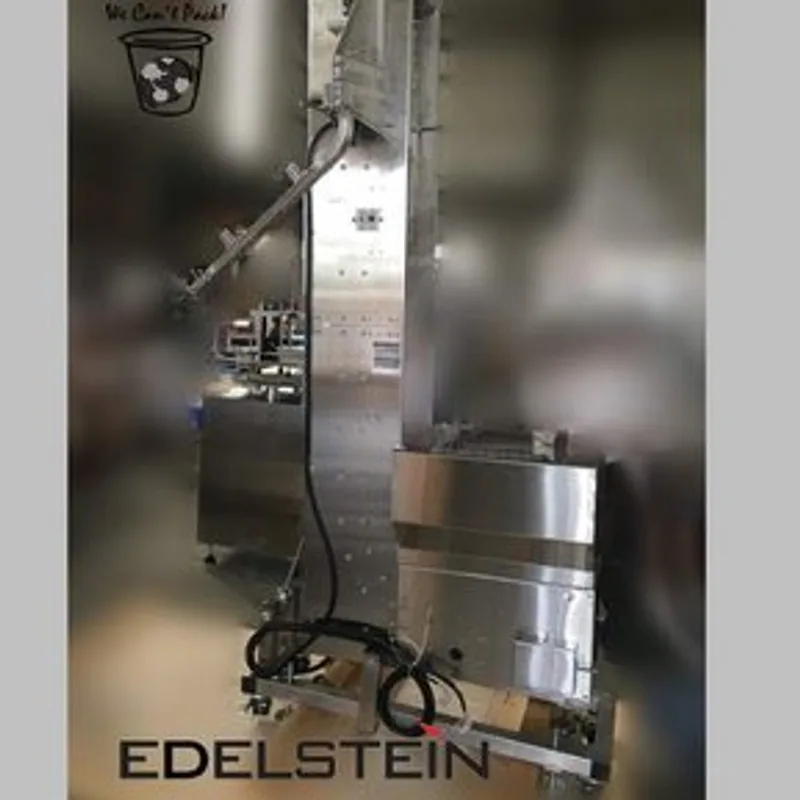
Lifting / Elevator Type
Elevates caps from bulk supply and aligns them before feeding into the line. Handles a wide range of cap sizes with high accuracy, at the cost of a larger footprint and higher initial cost.
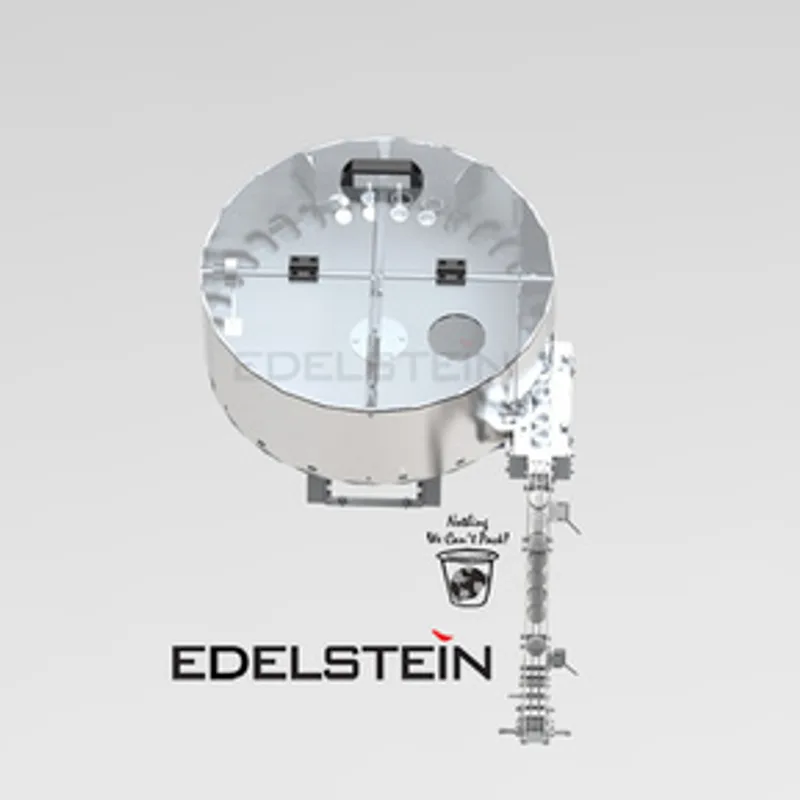
Centrifugal Type
Uses centrifugal force to sort and feed caps — highly efficient for high-speed production and reliable across cap sizes, but requires more frequent maintenance and adjustment than other types.
Vertical Wheel Type
A rotating wheel with pockets or cavities holds and sorts caps. High-speed, large-volume throughput, but needs regular cleaning and struggles with complex cap shapes.
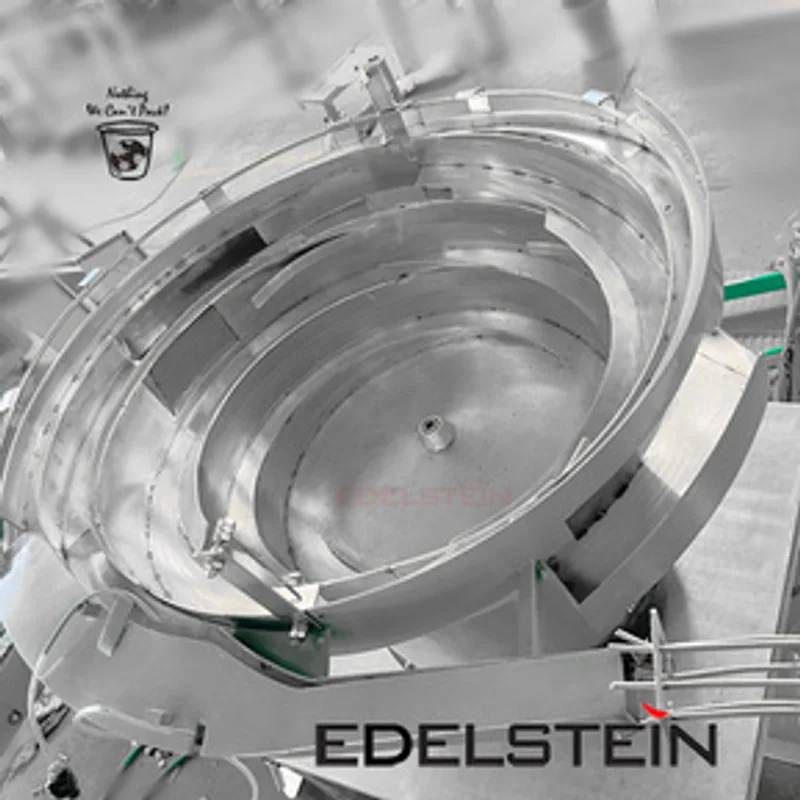
Vibration Type
Uses vibration to orient and feed caps. Versatile and simple to operate with minimal maintenance, though less suited to complex cap shapes and sensitive to environmental conditions.