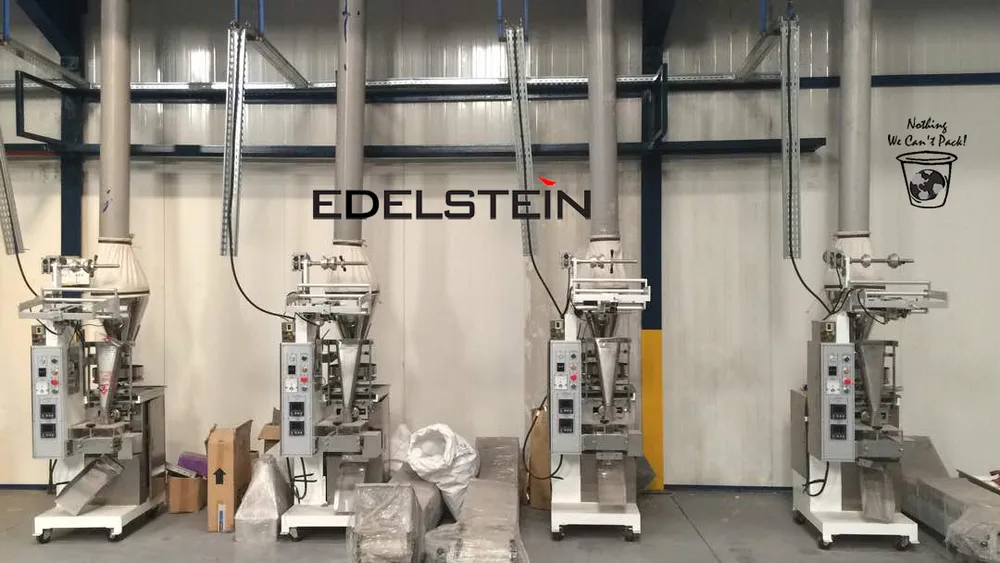
The Line
Each machine forms the bag from roll film, doses and drops product through the former, and seals and cuts the finished bag — independently of the other three. A multi-head weigher or auger doser above each machine controls fill accuracy; the VFFS unit itself only forms, fills, and seals whatever the doser delivers.
Engineering Notes
Four single-lane machines give more uptime resilience than one high-speed multi-lane unit — if one machine needs maintenance, the other three keep producing.
Powder products need dust containment at the former and jaw seal. A bag format that runs clean with granules can leak dust at the seal with fine powders.
Bag width and gusset changeover is mostly a former swap, not a whole-machine rebuild — keeping a set of formers on hand cuts changeover from hours to under 30 minutes.
Each lane can run a different product or bag size independently — something a single fast multi-lane machine generally can't do.
Fill accuracy is decided by the doser above the machine, not the VFFS itself — matching the right multi-head weigher or auger to your product is as important as the bagger choice.
Machinery in This Line
Frequently Asked Questions
-
Why run four separate machines instead of one fast one?
Uptime and flexibility. If one machine goes down for maintenance, the other three keep the line producing — a single high-speed machine has no such fallback. Multiple lanes can also run different bag sizes or products at the same time, which a single-lane high-speed machine cannot.
-
How long does it take to change bag size on a VFFS machine?
Typically under 30 minutes if you keep a set of formers sized for your common bag widths on hand — the former is the main part that changes for width and gusset depth. A full film-roll and settings change adds some time on top of that.
Planning a Bag Packaging Line?
Tell us your product, bag format, and target output. Our engineers will recommend a single- or multi-lane VFFS configuration — at no cost and with no commitment.
Talk to Our Engineers