In Production
Vertical Form-Fill-Seal Machine
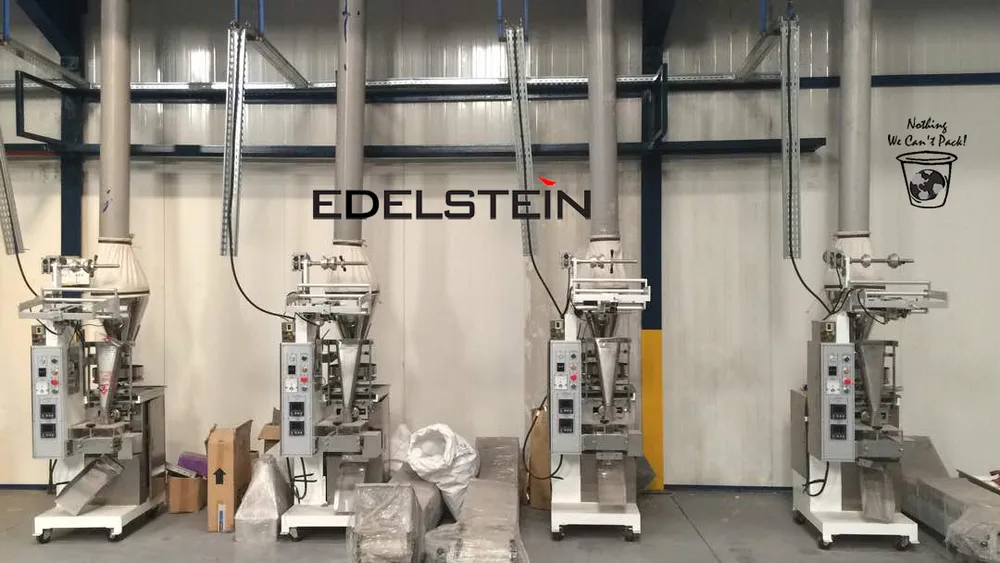
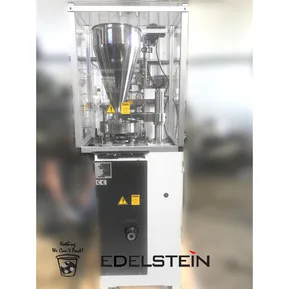
An EDELSTEIN VFFS bag packaging machine, configured for stand-up pouch and pillow bag production.
Vertical form-fill-seal (VFFS) machines form a bag from a roll of film, dose product into it, and seal it — all in one continuous vertical motion, without a pre-made container.
From powders and granules to liquids and snack foods: EDELSTEIN specifies bag style, dosing method, and film compatibility around your product's flow characteristics before any machine is proposed.
A bag packaging line is fundamentally different from bottle or cup lines: there is no empty container to load. The machine forms the bag itself from flat roll-stock film for every single cycle.
Film unwinds from a roll, is drawn down over a forming collar into a vertical tube, and is sealed along its length by a heated vertical seal bar. A dosing system — auger for powders, multihead weigher for granules and snack foods, or a piston/flowmeter for liquids — drops a measured amount of product into the open tube. Horizontal seal jaws then close and cut the bag below the product, forming the bottom of the next bag and the top of the current one in the same stroke.
Because the film, the forming collar, and the dosing head all interact, changing bag size or product type is more of a format-part change than a simple settings adjustment — the forming collar and film reel are typically matched to a specific bag width range.
VFFS bag packaging is the standard format for products where a flexible, low-material-cost pack is preferred over a rigid container.
Product flow behaviour (free-flowing powder, granule, or liquid) determines dosing technology. Bag style — pillow bag, gusseted bag, or stand-up pouch — is selected against shelf presentation and fill weight requirements.
A VFFS line forms, fills, and seals every bag in a single continuous vertical cycle.
Roll-stock film is drawn down over a forming collar and shaped into a vertical tube, with the edges overlapped and ready for the vertical seal.
A heated vertical seal bar bonds the overlapped film edge, closing the tube along its length as it advances downward.
Auger, multihead weigher, or piston/flowmeter dosing drops a measured quantity of product into the open tube above the horizontal seal point.
Horizontal jaws seal the bottom of the next bag and the top of the current bag in one stroke, then cut the film to separate the finished bag.
Batch and expiry codes are printed on the film before forming or on the finished bag, which then discharges onto a takeaway conveyor for cartoning.
An EDELSTEIN VFFS bag packaging machine, configured for stand-up pouch and pillow bag production.
These questions determine dosing technology, bag style, and film specification before any bag line machine is quoted.
Is the product a free-flowing powder, a granule/piece product, or a liquid?
Does the product dust, clump, or have an irregular bulk density that affects dosing accuracy?
What fill weight range and weighing accuracy (±g) is required?
What bag style is needed — pillow bag, gusseted bag, or stand-up pouch with zipper?
What film structure and barrier properties does the product require (moisture, oxygen, light protection)?
Is nitrogen flushing or modified-atmosphere packaging required for shelf-life extension?
What is the required output (bags per minute), and how many SKUs/bag sizes run on this line?
Is a resealable zipper, tear notch, or hang hole required for the finished bag?
A VFFS line is built around one central forming/filling/sealing machine, supported by upstream dosing and downstream handling equipment. Contact our engineering team for equipment matched to your production requirements.
Fixed-volume cup or chamber doses a consistent amount by volume — the default dosing method across most of the width range, for granular and small free-flowing products.
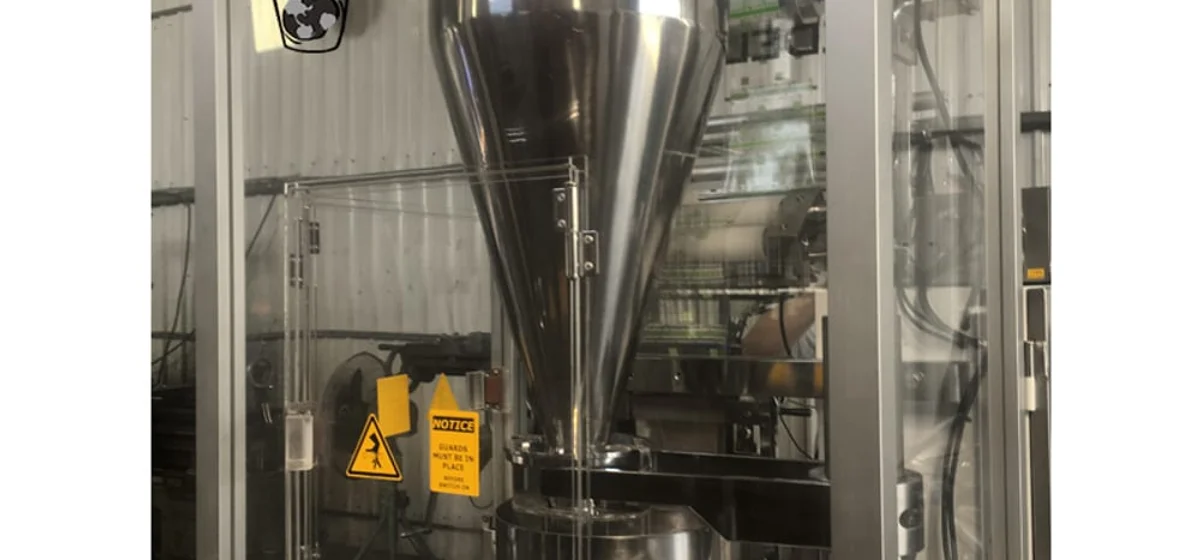
Volumetric screw-dosing for free-flowing powders — coffee, spices, protein powder — mounted above the VFFS forming tube.
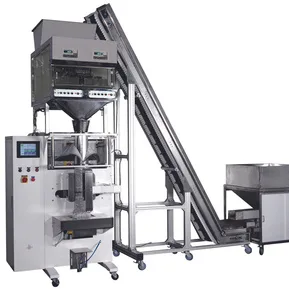
Combines multiple weigh heads — linear or rotary arrangement — to reach a target fill weight for granules, snack foods, and irregular-shaped pieces at high speed.
Piston or flowmeter-based dosing for liquid sachets and pouches, integrated with the VFFS forming tube. A co-extrusion variant handles viscous paste products (detergent, sauce) that can't be pumped through a standard nozzle.
Applies a resealable zipper strip to the film before forming, for stand-up pouches requiring repeated opening and closing.
In-line weight verification and metal contamination detection on finished bags, with automatic reject of non-conforming product.
The VFFS machine above is sized from one of three ranges, chosen by bag format and output target:
Co-extrusion PE bagging for bulk and large-format products at the top end of the VFFS range.
Auger dosing suits free-flowing powders with consistent bulk density — coffee, flour, protein powder. Multihead weighers suit granules, snack foods, and irregular pieces where volumetric dosing alone can't guarantee weight accuracy, because they weigh product directly rather than estimating by volume. Liquid dosing pumps are used for pourable products in sachets or stand-up pouches. Products that dust heavily or clump may need a specialised auger or agitator system regardless of category.
A pillow bag is the simplest VFFS output — a flat, sealed bag with no gusset, typically used for bulk or lower-cost SKUs. A stand-up pouch has a bottom gusset that lets it stand upright on a shelf, and usually includes a zipper for resealability — used where shelf presentation and repeat use matter, such as coffee, snacks, or pet food. Stand-up pouches require a more complex forming collar and additional gusset-folding tooling.
Within a limited range, yes — bag length is typically software-adjustable. Bag width, however, is set by the forming collar, so running a significantly different width requires a collar change and film reel change, which is a physical changeover rather than a settings adjustment. If your SKU range spans a wide range of bag widths, we size the machine and discuss changeover frequency during specification.
Nitrogen flushing displaces oxygen inside the bag before sealing, which slows oxidation and staling — commonly used for coffee, snack foods, and other products sensitive to oxygen exposure. It's not required for products that are shelf-stable regardless of oxygen content (salt, sugar). We size the flushing system based on your product's shelf-life target and packaging claims.
Share your product, target bag style, fill weight, and output target. Our engineering team will review your requirements and recommend a dosing method, film specification, and machine configuration — at no cost and with no commitment.
Start the Conversation