On-Site, From Install to Commissioning
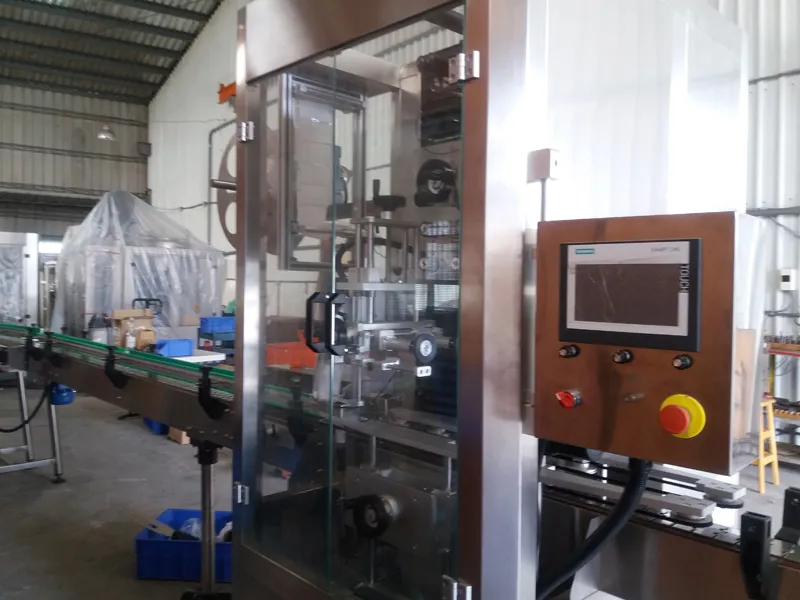
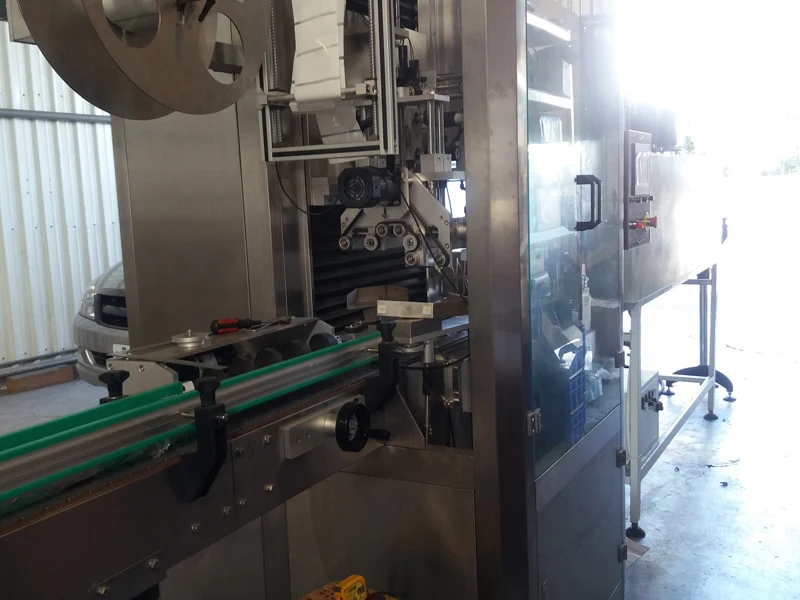
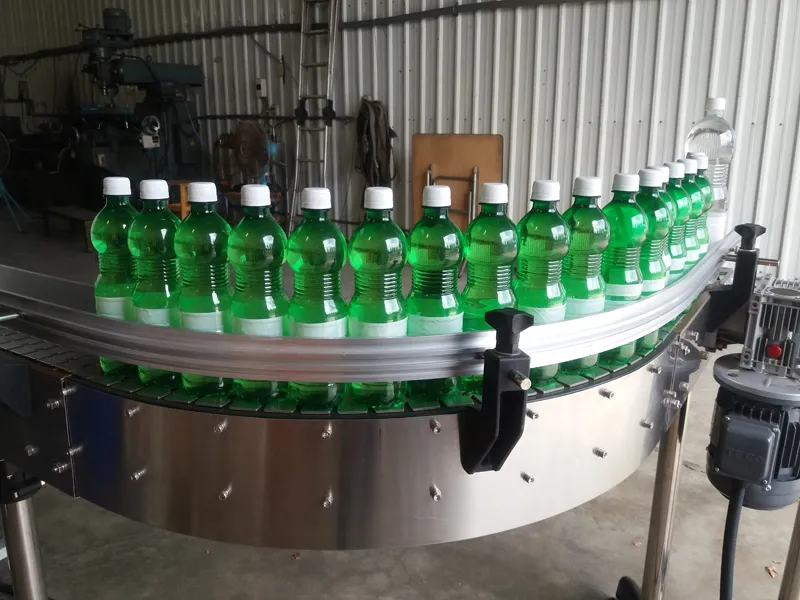
The core of the line is a rinse-fill-cap monobloc feeding a rotary labeler, with a conveyor system carrying bottles between stations and out to case packing. Below: the labeler being positioned during installation, and PET bottles moving through the conveyor curve at running speed.
Engineering Notes
Thin-wall PET deforms under excess cap torque. The capper's torque head is tuned per bottle weight during specification, not left at one factory setting across formats.
At high speed, bottle handling — starwheels and guide rails — causes more rejects than the filler itself. Most speed complaints trace back to conveyor and infeed tuning.
Ambient-fill water doesn't need the cold-fill condensation handling that dairy or juice lines require, which simplifies the labeler specification.
Large-format bottles (5 L+) need gripper-neck handling instead of the base-supported handling used for small retail formats. Running both on one line needs a two-position changeover kit.
Line speed is usually capacity-planned around the capper rather than the filler, since capping is the more mechanically limited step at high volumes.
Machinery in This Line
Frequently Asked Questions
-
Can one line handle both small and large bottle formats?
Yes, with a changeover kit sized for your specific format range. Small retail bottles and large-format jugs use different bottle-handling geometry, so we specify the changeover parts — starwheels, guides, and gripper heads — against your actual SKU list rather than a generic range.
-
What causes bottle jams at high speed if the filler is running fine?
Almost always the conveyor and infeed, not the filler. Guide rail spacing, starwheel timing, and bottle pressure on the conveyor cause the majority of high-speed rejects. If a line is jamming above a certain speed, that's usually where we look first before touching the filler settings.
Planning a Water or Beverage Bottling Line?
Tell us your bottle formats, output target, and line speed goal. Our engineers will recommend the right filling, capping, and conveying configuration — at no cost and with no commitment.
Talk to Our Engineers