In Production
Soft Tube Filling-Sealing Machine
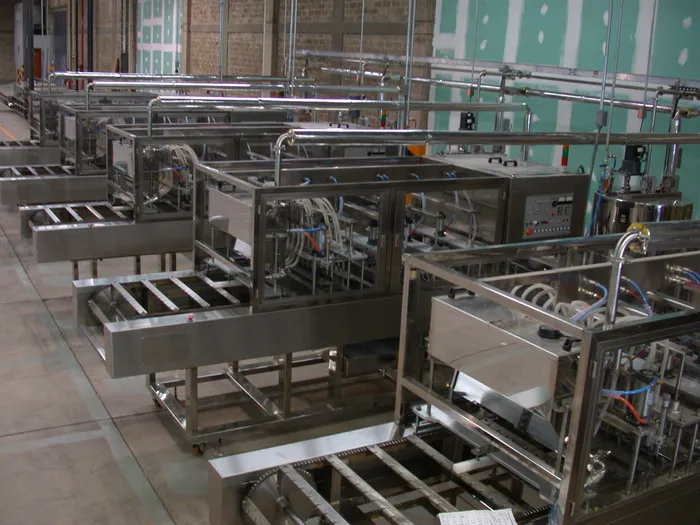
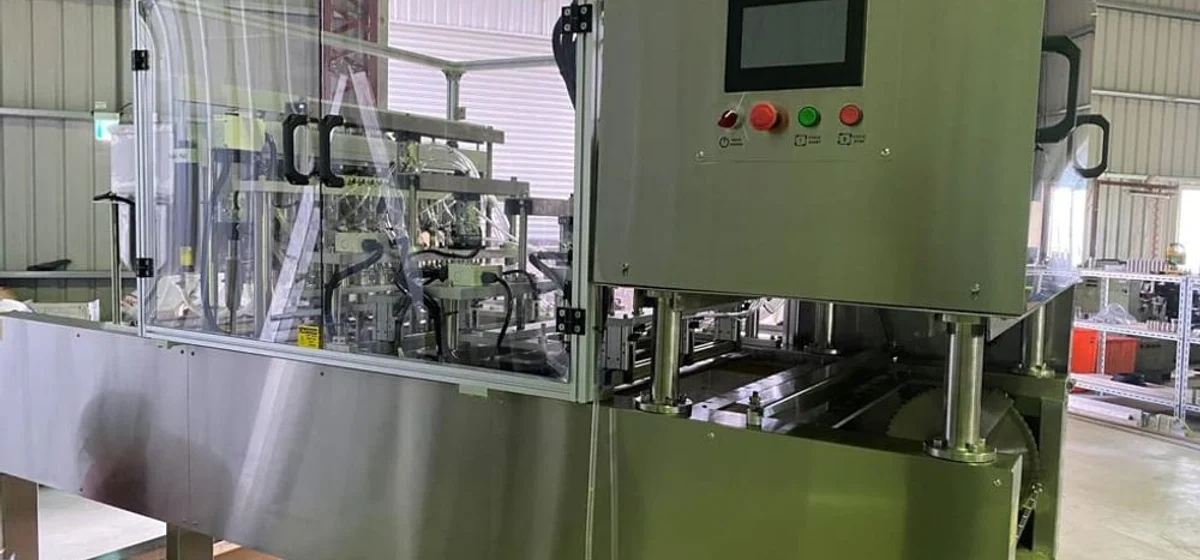
An EDELSTEIN auto soft tube filling-sealing machine, configured for Bong-Bong Ice (popsicle stick) production.
Soft tube filling-sealing machines form, dose, and seal a continuous plastic tube into individual sealed sticks in one pass — best known for ice pops, but used across a wide range of single-dose liquid products.
From Bong-Bong Ice production to juice sticks, jelly, and single-dose pharmaceutical liquids: EDELSTEIN's auto and semi-auto soft tube machines handle fill volumes from 60–200 cc at up to 60 sticks per minute per lane.
A soft tube line doesn't load a pre-made container the way a bottle or cup line does — it forms the tube itself from continuous plastic film, fills it, and seals it into individual sticks in one motion.
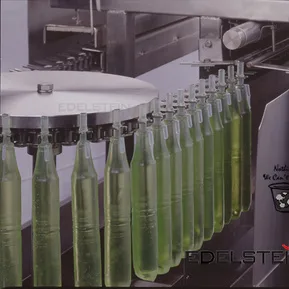
Film is formed into a continuous tube, product is dosed through a piston filling system into each segment, and the tube is heat-sealed and cut at fixed intervals — producing a line of individual sealed sticks. This is the same working principle used to make Bong-Bong Ice (popsicle sticks), and it applies equally well to any pourable liquid that benefits from a single-dose, tamper-sealed format.
Auto machines run fully mechanised at up to 60 sticks per minute per lane, with multi-lane configurations available for higher output. Semi-auto machines (turn-orbit or stadium type) are used for lower volumes, product trials, or where manual quality inspection at each fill point is preferred.
Soft tube packaging suits any pourable product that benefits from a single-dose, squeeze-to-open format.
Fill volume, viscosity, and whether the finished product needs freezing (as with ice pops) determine machine speed, lane count, and any downstream cooling or freezing equipment required.
A soft tube line forms, fills, and seals every stick in one continuous cycle — with freezing added downstream for ice products.
Film is drawn continuously and formed into a tube shape, ready for filling and sealing at each cycle.
A precise dose is injected into each tube segment as it advances — multi-lane machines fill several sticks per cycle.
Each stick is sealed at both ends and separated from the next by a heated seal-and-cut station, producing an individually sealed tube.
For Bong-Bong Ice and similar frozen products, sticks pass through a brine or air freezing tunnel before packing.
Finished sticks are counted, bundled, and loaded into cartons or bags for cold-chain or ambient distribution.
An EDELSTEIN auto soft tube filling-sealing machine, configured for Bong-Bong Ice (popsicle stick) production.
Two levels of automation cover most soft tube production requirements, supported by freezing equipment for frozen products.
Brine or air-blast freezing conveyor for ice pop and Bong-Bong Ice lines, positioned immediately after the filling-sealing machine.
Both automation levels above break down further by lane count and loading method:
Multiple lanes running in parallel on one chassis, multiplying single-lane throughput without stepping up to a larger standalone machine.
Tubes arranged on a stadium/oval track for manual loading, with mechanised fill-seal cycling.
The simplest semi-automatic configuration, requiring the most operator involvement — typically the lowest-cost entry point for soft tube filling.
These questions determine machine speed, lane count, and whether freezing equipment is needed.
Does the finished product need to be frozen (ice pops) or is it shelf-stable at ambient/chilled temperature?
What fill volume is required, within the 60–200 cc standard range?
Does the product contain particulates (fruit pieces, jelly chunks) that affect the piston filling system?
What output (sticks per minute) do you need, and would a multi-lane machine be more cost-effective than running longer hours?
Is this a new product line (semi-auto for trial runs) or an established SKU justifying full automation?
Does the product require food-grade, pharmaceutical, or cosmetic hygiene standards?
No — this is a soft tube (stick pack) line: the machine forms a continuous plastic tube from film, fills it, and seals it into individual sticks, rather than filling a pre-made rigid container. It's the format used for Bong-Bong Ice, juice sticks, and single-dose liquid sachets. If you need a rigid squeeze-tube line (for cosmetics or toothpaste with a pre-formed, pre-capped tube), talk to our team directly — that's a separate machine configuration we scope individually.
Auto machines run the full forming-filling-sealing cycle mechanically at up to 60 sticks per minute per lane, suited to established production volumes. Semi-auto (turn-orbit or stadium type) machines involve more manual operation and run slower — a good fit for new product trials, seasonal/low-volume runs, or where you want to inspect fill quality by hand before committing to full automation.
Yes — for Bong-Bong Ice and similar frozen products, we specify the freezing tunnel (brine or air-blast) as part of the turnkey line alongside the filling-sealing machine, sized to match your throughput so product isn't fully frozen before it clears the tunnel or still liquid after it.
Share your product, fill volume, target output, and whether the finished product needs freezing. Our engineering team will recommend a machine configuration and lane count — at no cost and with no commitment.
Start the Conversation